

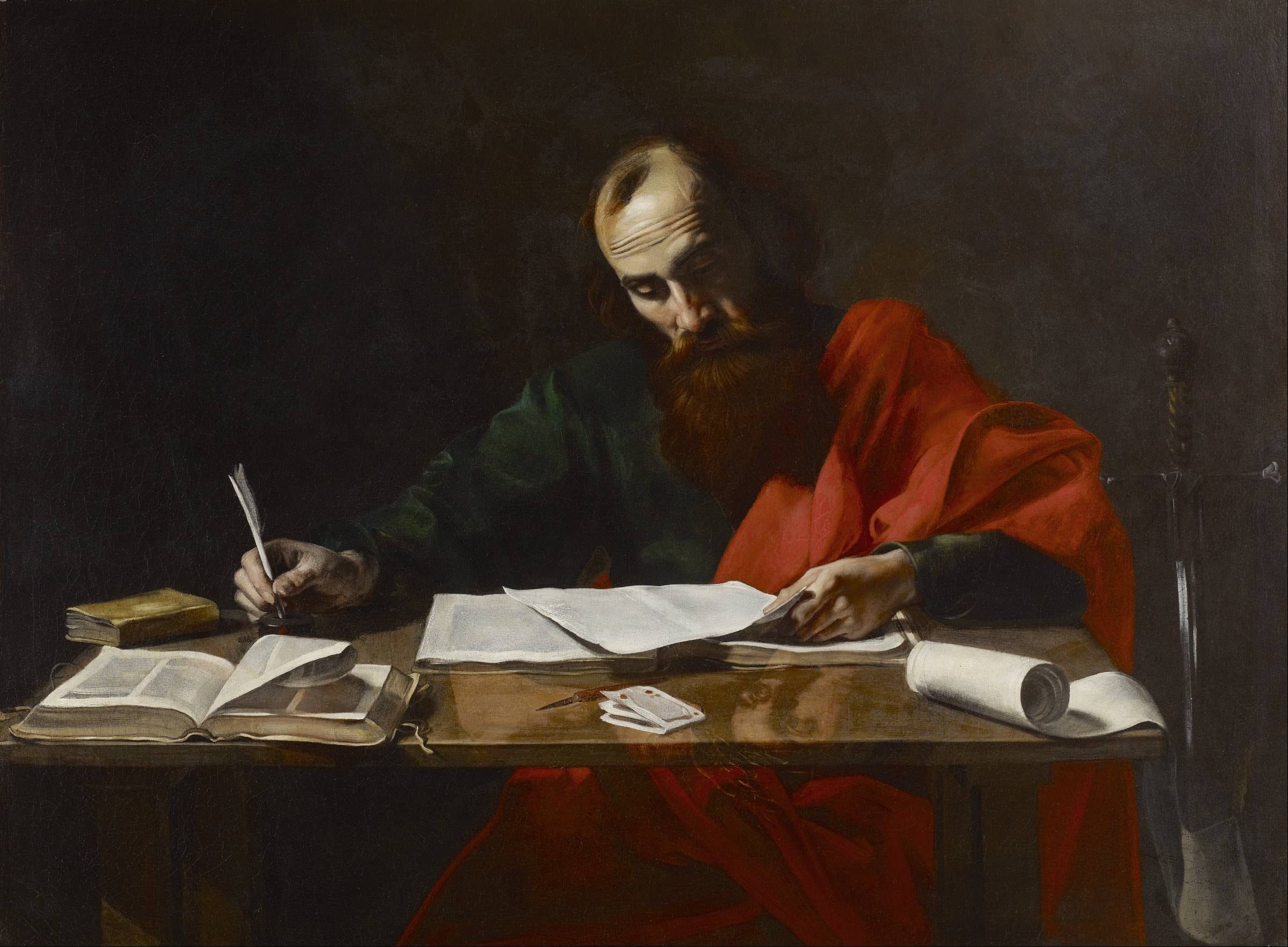
Today's Verse
Not that I am speaking of being in need, for I have learned, in whatever situation I am, to be content. I know how to be brought low, and I know how to abound. In any and every circumstance, I have learned the secret of facing plenty and hunger, abundance and need.
Philippians 4:11-12 (ESV)
Historical Context
Paul writes to the church at Philippi from prison — most likely Rome, around AD 61-62 — shackled and awaiting a verdict that could cost him his life. Philippi was a Roman colony in Macedonia, a proud city of retired soldiers and civic honor. Its citizens prized self-sufficiency; the Stoic philosophers who shaped the wider culture prized it too. A wise man, the Stoics said, is untouched by circumstance because he has mastered his passions from within.
Into this world Paul drops a letter of thanks. The Philippians had heard he was in prison and sent Epaphroditus with a financial gift (Phil 2:25, 4:18). It was not the first time. From the very start of Paul's mission — when he crossed from Asia into Europe after the Macedonian vision (Acts 16) — the Philippians alone had entered into a giving-and-receiving partnership with him. Lydia opened her home. The jailer opened his. This small church kept opening its purse.
Paul must thank them without flattering them, and without suggesting he was desperate. So he uses the language his readers know — the vocabulary of Stoic contentment (autarkeia, self-sufficiency) — and quietly turns it inside out. He has learned contentment, yes. But not from within. Not by mastering himself. He has learned it as a disciple learns from a Master, over years of hunger and plenty, prison and freedom, stoning and rescue. The secret is not a technique. The secret is a Person. And that changes everything the Philippians thought they knew about strength.
Reflection
"I can do all things through him who strengthens me" is probably the most misquoted verse in the New Testament. It is stitched on graduation caps and shouted before football games. But Paul is not talking about winning. He is talking about not falling apart when you lose.
Read the sentence in its neighborhood. Paul has just said he knows how to be brought low. He knows what it is to be hungry. He knows what an empty cell feels like at three in the morning. And he knows the other side too — the full table, the friends, the freedom. The secret he has learned is that Christ holds him steady in both.
Notice the verb: learned. Twice. Contentment is not a personality trait some Christians are born with. It is a discipleship. It is trained into you the way a soldier is trained — through drills you did not choose and would not have chosen. God brings you low. God lifts you up. In both, He is teaching you that your life is not in the circumstance but in the Christ who stands beside you in it.
This is why the world's peace cannot survive a hospital waiting room, and Paul's peace can survive a Roman prison. The Stoic says: need nothing, and you will suffer nothing. The Christian says: I need Christ, and He is enough. One is a fortress of the self. The other is a Person who will never leave.
What has God been teaching you in the low place? Do not waste the lesson. He is not punishing you. He is training a saint.
For Reflection
Where in your life right now is God teaching you contentment — and what are you tempted to reach for instead of Him?
Prayer
Father, I confess how quickly I look to circumstances for the peace only You can give. Teach me, as You taught Paul, to be content in the low place and the high place, in hunger and in plenty. Strip away my false securities and let Christ be my sufficiency. When I am brought low, hold me. When I abound, keep me humble. In every circumstance, be my strength and my portion. In Jesus' name, Amen.
Recent Devotionals
The Hidden Life of the Kingdom — July 29, 2026
Something Greater Than Jonah Is Here — July 25, 2026
Stephen's Last Sermon Before the Stones — July 24, 2026
Image: Attributed to Valentin de Boulogne, File:Probably Valentin de Boulogne - Saint Paul Writing His Epistles - Google Art Project.jpg, c. 1618 — Public domain via Wikimedia Commons.
Scripture quotations are from the ESV® Bible (The Holy Bible, English Standard Version®), copyright © 2001 by Crossway, a publishing ministry of Good News Publishers. Used by permission. All rights reserved.
He had supernatural help. The same help that is available to us. But we play a role by asking and allowing the Holy Spirit to rule. Thanks. We need reminding all the time, how good our God is.
AMEN❣️🙏 When I am weak, then I am strong for Jesus said My grace is sufficient for you for My power is made perfect in weakness (2 Cor: 12-9)