

Today's Verse
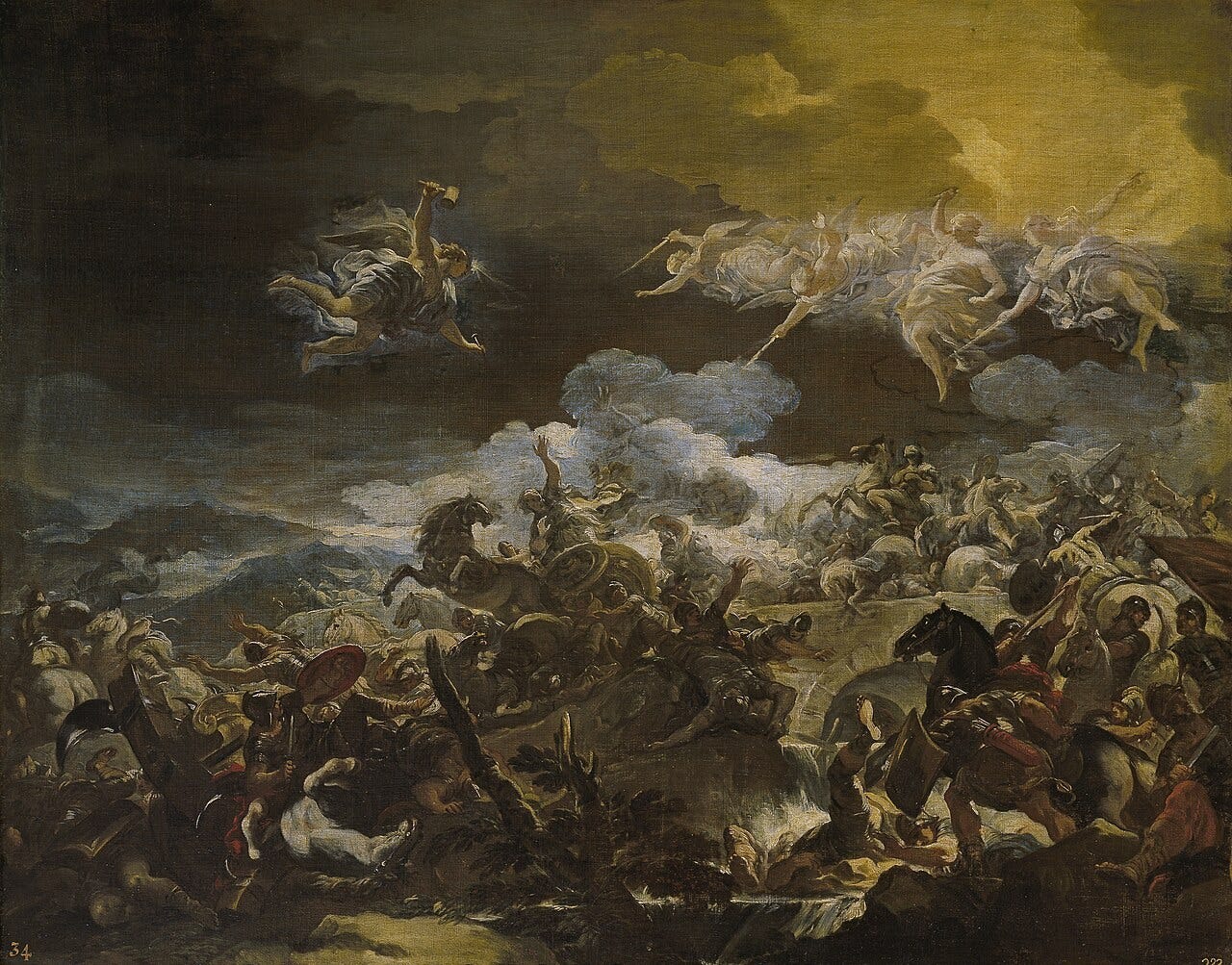
And the LORD routed Sisera and all his chariots and all his army before Barak by the edge of the sword. And Sisera got down from his chariot and fled away on foot.
Judges 4:15
Historical Context
Judges covers the roughly two centuries between Joshua's death and the rise of Samuel, a period the book itself diagnoses with a refrain: everyone did what was right in his own eyes. Israel settles the land, forgets the Lord, falls under an oppressor, cries out, and God raises up a judge to deliver them. Then the cycle repeats, each turn darker than the last.
Jabin, king of Hazor in the north, has oppressed Israel for twenty years. His general Sisera commands 900 iron chariots, the tanks of the Bronze Age, against an Israelite militia with no comparable weapons. Iron chariots on the plains were nearly unbeatable, which is why the Lord draws Sisera to the Kishon, where a sudden storm (celebrated in the song of chapter 5) turns the valley to mud and strands his forces.
Barak, from Kedesh in Naphtali, has gathered ten thousand men on Mount Tabor at the LORD's command, delivered through the prophet Deborah. When the word comes to go, he leads them down the slope toward the chariots. Verse 15 tells us who actually won the day: the LORD routed Sisera and all his chariots before Barak.
Sisera abandons his chariot and runs on foot, the commander of nine hundred chariots reduced to a fugitive. Barak pursues the army all the way back to Harosheth-hagoyim, and not a man of it is left. Sisera himself finds no safe hiding place. He dies in the tent where he had gone for shelter, and from that day Jabin's grip on Israel begins to break.
Reflection
There is a detail in verse 15 that is easy to read past. Sisera got down from his chariot and fled away on foot.
For twenty years that chariot had stood for everything Israel feared. Nine hundred of them, iron-fitted, fast on flat ground, unstoppable against men on foot. Sisera had ridden at the head of the most feared army in the region. And in one afternoon he climbed out and ran, because the thing he trusted had become a trap. The rain came, the Kishon rose, the wheels sank, and the iron that had made him strong now made him slow.
Notice who the text says did this. Barak led the charge, and the men of Naphtali and Zebulun fought hard, but verse 15 puts the verb where it belongs: the LORD routed Sisera. Barak's sword was real. The victory was God's.
Most of us have something we ride in. A salary, a reputation, a strong body, a quick mind, a sense that we have things under control. These are good gifts, and there is nothing wrong with using them. The danger is in trusting them, building our security on them the way Sisera built his on iron. "Some trust in chariots and some in horses, but we trust in the name of the LORD our God" (Psalm 20:7). On the day of trouble the chariot can bog down in the mud, and then the only question is whose name you have been trusting.
There is comfort here too for anyone who feels outmatched. Israel had no chariots at all. They had a promise, a mountain and a God who commands the weather, and that turned out to be enough. Whatever is bearing down on you this morning is no stronger than the One who goes out before His people. At the cross Christ met the strongest enemy of all, and He rose. The enemy that looked unbeatable is already running.
For Reflection
What are you riding in, trusting it to carry you, that the Lord may be asking you to climb down from so you can trust Him instead?
Prayer
Father, we confess that we trust our own chariots, our money, our skill and our plans, more than we trust You. Forgive us. Thank You that no iron can stand against You, that You command the clouds and the rivers, and that You go out before Your people. When trouble comes, let us be found trusting in Your name. We thank You that in Christ the great enemy is already defeated. In Jesus' name, Amen.
Paid subscribers get the study section below: the word behind the English, the setting, and where this thread runs through the rest of Scripture.