

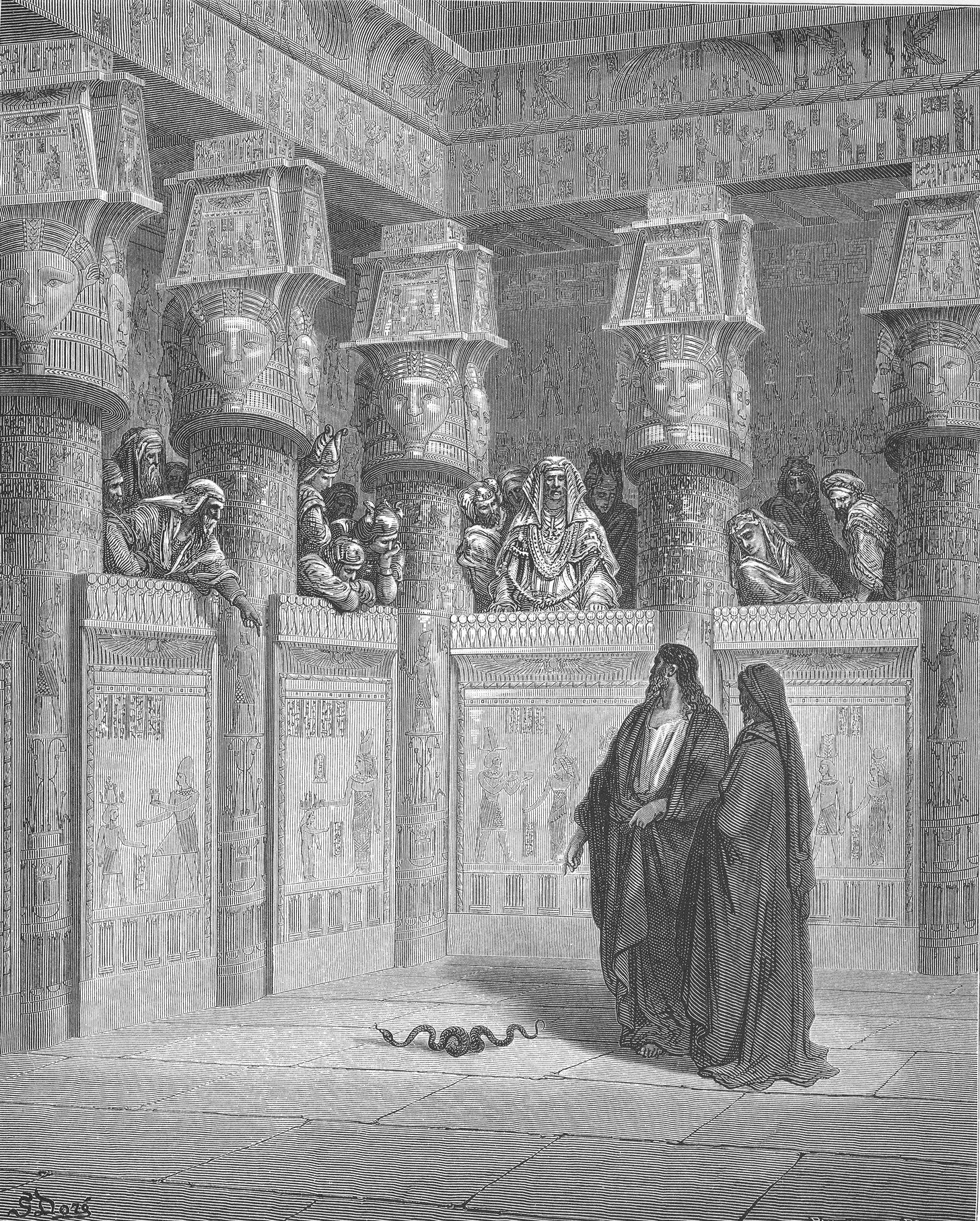
Today's Verse
Then Moses turned to the LORD and said, 'O Lord, why have you done evil to this people? Why did you ever send me? For since I came to Pharaoh to speak in your name, he has done evil to this people, and you have not delivered your people at all.'
Exodus 5:22-23
Historical Context
Exodus was written by Moses for the generation God was forming into a nation at Sinai. By the time of chapter 5, Israel has been in Egypt roughly four hundred years, most of it under increasingly brutal forced labor. The Pharaoh here is almost certainly a New Kingdom ruler running massive building projects in the eastern Delta, where store cities like Pithom and Raamses were rising. Mudbrick was the ordinary building material of Egypt, made by mixing Nile clay with chopped straw, which released acids that strengthened the brick as it dried. Straw was normally supplied by the state to slave crews; withdrawing it while keeping the quota fixed was a calculated punishment that any Egyptian foreman would have recognized as cruel and unworkable.
Pharaoh was not merely a political ruler. He was regarded as a living god, the son of Ra, the keeper of ma'at, the cosmic order. When Moses says, 'Thus says the LORD, the God of Israel,' he is speaking one god's word into another god's throne room. Pharaoh's reply, 'Who is the LORD? I do not know the LORD,' is not honest ignorance. It is a divine claim answering a divine claim.
Moses himself is a reluctant prophet who has just returned from forty years tending sheep in Midian. He expected resistance from Pharaoh but not, it seems, from his own people. When the Israelite foremen turn on him in 5:21, and Moses turns on God in 5:22, we are watching the shape of every deliverance story God tells: the situation gets darker before the light comes, and the deliverer feels the weight before the people feel the freedom.
Reflection
There is a particular kind of pain that only comes from obeying God. Moses did exactly what he was told. He went to Pharaoh, spoke the words he was given, and the result was that his people were beaten harder and blamed him for it. 'You have made us stink in the sight of Pharaoh.' That is what obedience got him.
If you have walked with the Lord for any length of time, you know this ground. You told the truth and lost the friendship. You forgave and were taken advantage of again. You stepped out in faith and the bottom fell out. You prayed for a family member and they got worse. And somewhere in the quiet you have thought, or nearly thought, what Moses said out loud: Lord, why did you ever send me? You have not delivered at all.
Notice what God does not do. He does not rebuke Moses for the complaint. He does not explain the plan in advance. He answers with who He is. 'I am the LORD.' 'I have heard.' 'I have remembered.' 'I will bring you out. I will deliver. I will redeem. I will take you to be my people. I will be your God.' Seven times, 'I will.' The ground under Moses is not a strategy. It is a Person, and a covenant that Person made to Abraham centuries before Moses drew breath.
That is the ground under you too. The cross is the proof. When things looked worst, when the disciples said all was lost, God was working the deepest deliverance in history. Faithfulness in the dark is not evidence God has forgotten you. It is often the very hour He is remembering His covenant.
For Reflection
Where in your life right now does obedience seem to be making things worse, and what would it look like to stand on God's 'I will' instead of on visible results?
Prayer
Almighty God, I confess I want obedience to feel like progress, and I grow weary when it does not. Teach me to stand on who You are and what You have promised, not on what I can see today. When my spirit is broken and the work is heavy, remind me that You have heard, You have remembered, and You will deliver. Anchor me in the covenant sealed in the blood of Your Son, and give me courage to keep walking. In Jesus' name, Amen.
Paid subscribers get the study section below: the word behind the English, the setting, and where this thread runs through the rest of Scripture.