

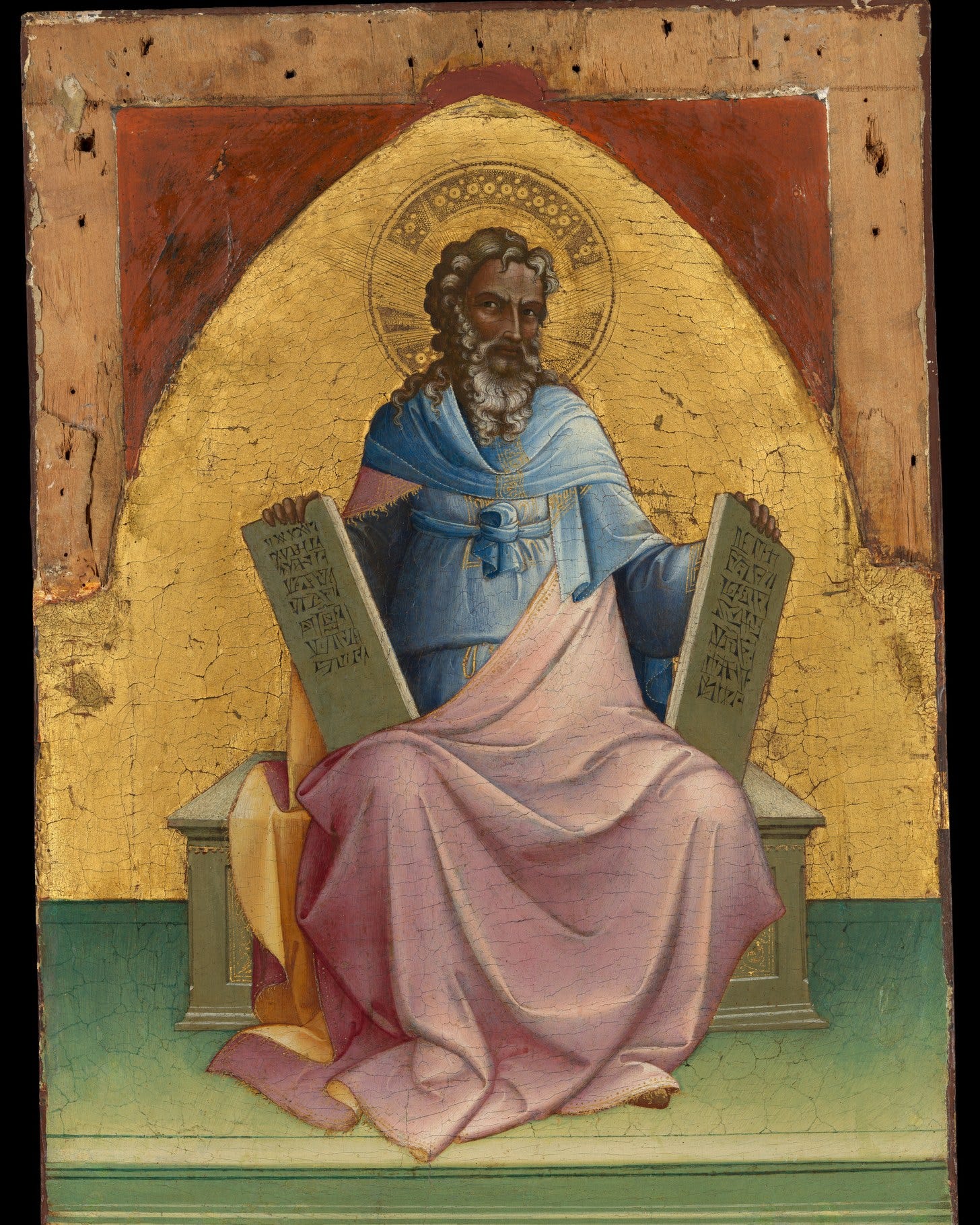
Today's Verse
The LORD said to him, "What is that in your hand?" He said, "A staff." And he said, "Throw it on the ground." So he threw it on the ground, and it became a serpent, and Moses ran from it.
Exodus 4:2-3
Historical Context
Exodus was written by Moses for the generation God brought out of Egypt and led toward Sinai and the Promised Land. Chapter 4 sits inside the burning bush encounter that began in chapter 3. Moses is eighty years old, a fugitive from Egyptian justice, a shepherd in Midian for forty years. He has just been told to go back to Pharaoh, the most powerful man in the known world, and demand the release of an enslaved people numbering in the hundreds of thousands.
His objection in verse 1 is not unreasonable on the surface. Israel had been in Egypt for four centuries. The last patriarch, Joseph, was long dead. The Israelites were slaves grinding out bricks under quotas. Why would they believe an old shepherd with a Midianite wife and a foreign accent claiming a private encounter with the God of their fathers?
The staff in Moses' hand was the ordinary tool of his forty-year exile, a shepherd's rod for guiding sheep and fending off predators. In Egyptian court religion, the serpent was a symbol of Pharaoh himself, worn on his crown. Leprosy was the most feared disease of the ancient Near East, a walking death that cut a man off from community and worship. The Nile was Egypt's god, its lifeblood, the river Pharaoh had once ordered filled with Hebrew infants.
The three signs, then, are not arbitrary magic tricks. Each one strikes at something Egypt worshipped or feared, and each one puts that thing under the hand of the LORD. Before Moses has left Midian, God has already shown him in miniature what He will do to Egypt on a national scale.
Reflection
Moses' first objection is the one most of us live with quietly for years. They will not believe me. I am not enough. I do not have what it takes. And God's answer is strange. He does not give Moses a speech to memorize or a resume to hand out. He asks a question. What is that in your hand?
A staff. A stick. The tool Moses had been using to do the small, hidden work God gave him for forty years while the world forgot his name. That is what God wanted. Not something Moses did not have, but something he already did.
We waste a great deal of the Christian life waiting to be equipped for a calling we imagine is somewhere else. We think faithfulness will begin once we have more time, more knowledge, more courage, a different season, a better platform. Meanwhile there is a staff in our hand. There is a job, a household, a neighbor, a Bible on the shelf, an hour we could give to prayer. God does miracles through what we already hold when we are willing to throw it on the ground at His command.
Notice too that the staff had to leave Moses' hand to become a sign. As long as he gripped it, it was just wood. Cast down in obedience, it became something God used to bring a nation out of slavery. What we clutch stays ordinary. What we surrender, God can transform.
And the deepest comfort is this: the God who called Moses is the same God who took on flesh, who was lifted up like the bronze serpent, who by His own wounded hand heals ours. He does not send us alone. He sends us with Himself.
For Reflection
What is the ordinary thing already in your hand that God may be asking you to throw down in obedience?
Prayer
Father, forgive us for the excuses we have hidden behind, and for the callings we have refused because we felt too small. Open our hands. Show us what You have already given us, and give us the courage to lay it down at Your feet. Work through our ordinary lives to display Your extraordinary power, and let us trust that the Lord Jesus, who was sent by You for our salvation, goes with us wherever You send us. In Jesus' name, Amen.
Paid subscribers get the study section below: the word behind the English, the setting, and where this thread runs through the rest of Scripture.