

Today's Verse
We are powerless against this great horde that is coming against us. We do not know what to do, but our eyes are on you.
2 Chronicles 20:12
Historical Context
The Chronicler is writing after the exile, looking back on the kings of Judah and asking what made some reigns flourish and others collapse. His audience is a chastened people rebuilding their life around the temple, and he wants them to see that the throne of David stood or fell on whether the king trusted the LORD.
Jehoshaphat reigned in the ninth century B.C., a generation after the kingdom split. He had inherited a small, vulnerable southern kingdom hemmed in by stronger neighbors. In chapter 20, three of those neighbors — Moab, Ammon, and the men of Mount Seir (Edomite territory) — formed a coalition and marched on Judah from the south. They were already at En-gedi by the time word reached the king. There was no time to muster allies. Judah's army was outmatched.
Notice where Jehoshaphat goes. Not first to his generals, not to Egypt for chariots, not to a fortified city. He goes to the house of the LORD and calls a national fast. His prayer is built on the covenant: God's sovereignty over the nations (v.6), the promise to Abraham (v.7), and Solomon's dedication of the temple, where the king had said that in disaster Israel would cry out toward this house and be heard (v.9; see 2 Chronicles 6).
The sting in verse 10 is real: the very peoples Israel had spared in obedience to God under Moses were now repaying that mercy with invasion. Jehoshaphat lays it all before God and ends with the line that has carried God's people ever since: we do not know what to do, but our eyes are on you.
Reflection
There is a particular kind of fear that strips you of options. The diagnosis is read aloud. The marriage is unraveling faster than you can patch it. The job is gone. The child has walked away from the faith and will not take your calls. You have prayed, planned, fasted, tried — and the army is still at En-gedi.
Jehoshaphat does not pretend to be braver than he is. He does not work himself up into a confidence he doesn't feel. He says it plainly in front of the whole assembly: we are powerless. We do not know what to do. This is not weakness; this is sanity. The first step of faith is often the admission that you have run out of yourself.
But he does not stop at despair. He finishes the sentence: our eyes are on you. He prays the promises back to God — what God has said, what God has done, what God has covenanted. He stands on the sanctuary, and we stand on something greater. The temple Jehoshaphat faced has been fulfilled in Christ, whose body was torn down and raised, and who now sits at the Father's right hand interceding for us. When you do not know what to do, you have a High Priest who does.
Lift your eyes. Not to your strength, which is gone. Not to your strategy, which has failed. Not even to your faith, which feels thin. Lift them to the Lord who rules over all the kingdoms of the nations, who heard Jehoshaphat and gave the victory the next day without Judah lifting a sword. He has not changed. Your powerlessness is not your problem; your gaze is.
For Reflection
Where in your life right now are you being asked to say honestly, "I do not know what to do" — and what would it look like this week to fix your eyes on the Lord instead of on the horde?
Prayer
Almighty God, our God of heaven, who rules over every kingdom and every power, we confess that we are not as strong as we have pretended to be. The troubles before us are real, and we do not know what to do. But our eyes are on you. Remind us of your promises. Steady us by your Spirit. Teach us to stand still and see your salvation, won for us by your Son who conquered every enemy at the cross and the empty tomb. In Jesus' name, Amen.
Recent Devotionals
Our Sins Cast Into the Depths of the Sea — June 25, 2026
Sheep Sent Among Wolves — June 24, 2026
Be Faithful Unto Death — June 23, 2026
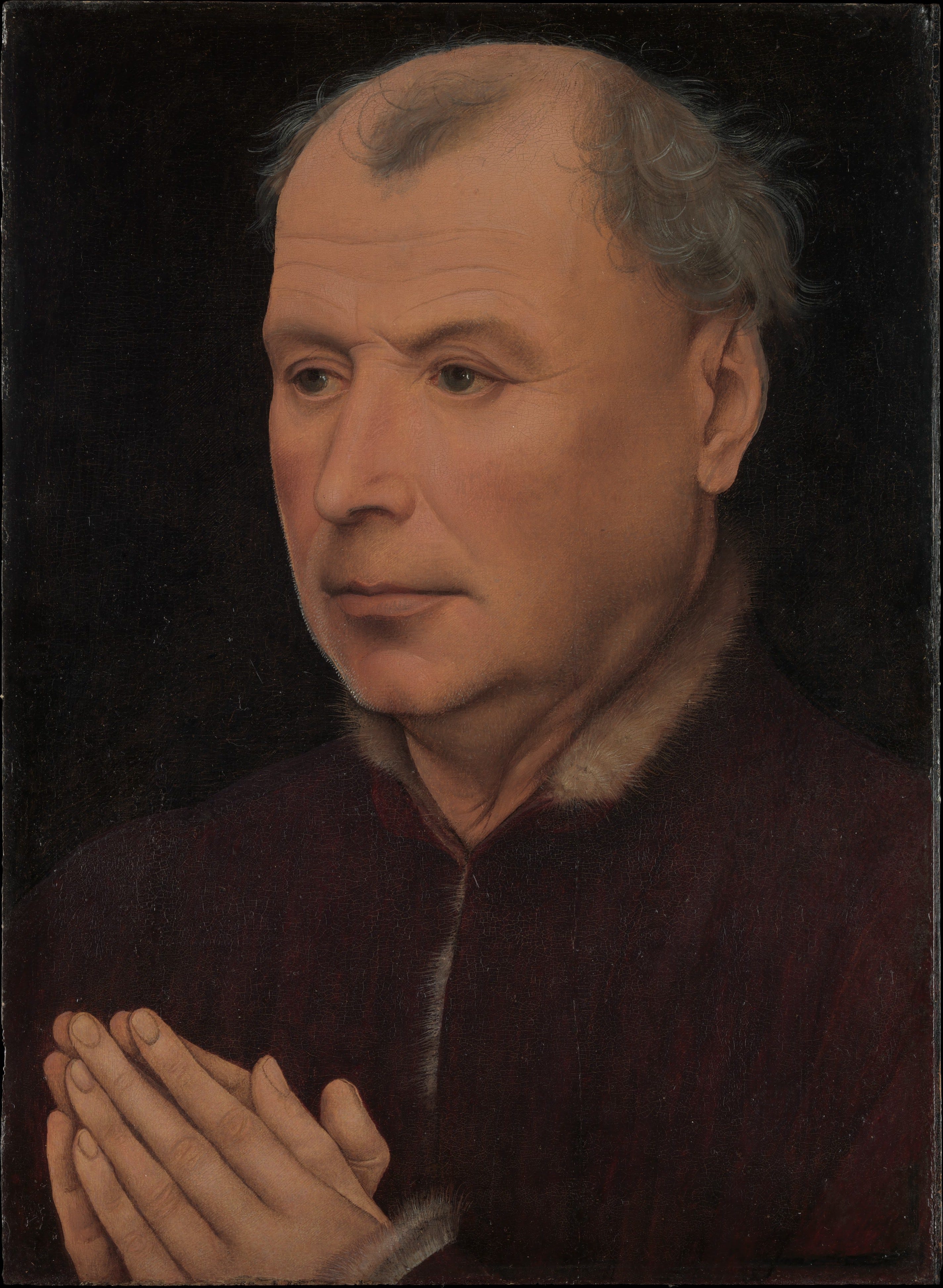
Image: Rogier van der Weyden, Man in Prayer, c. ca. 1440, Metropolitan Museum of Art, New York — Bequest of Mary Stillman Harkness, 1950 via The Metropolitan Museum of Art.
Scripture quotations are from the ESV® Bible (The Holy Bible, English Standard Version®), copyright © 2001 by Crossway, a publishing ministry of Good News Publishers. Used by permission. All rights reserved.
Praise be to the Lord Jesus❣️Hallelujah and AMEN❣️❤️💕🎶😻