

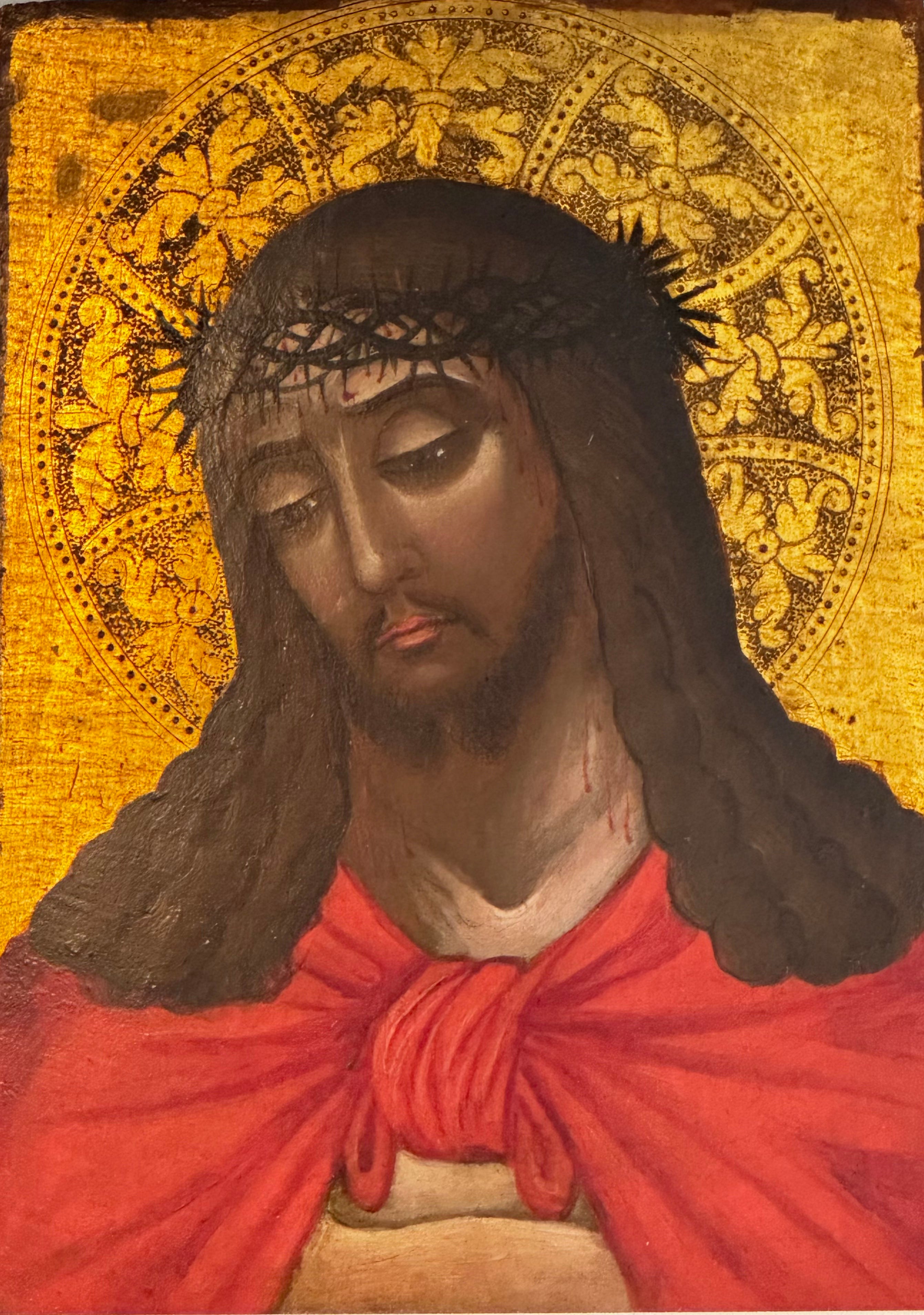
Today's Verse
The voice of my beloved! Behold, he comes, leaping over the mountains, bounding over the hills… My beloved speaks and says to me: 'Arise, my love, my beautiful one, and come away, for behold, the winter is past; the rain is over and gone.'
Song of Solomon 2:8, 10-11
Historical Context
The Song of Solomon is a Hebrew love poem, traditionally ascribed to Solomon and preserved in Israel's Scriptures as a celebration of covenant love between husband and wife. On its plain level, it is an unembarrassed poem about the goodness of marital desire — a gift from God written into the canon precisely because human love, rightly ordered, reflects something true about God himself.
But Jewish and Christian readers have always heard a second voice in this song. The rabbis read it as a picture of the Lord's love for Israel; the Church Fathers, following the pattern already set in Hosea, Ezekiel 16, Isaiah 54, and Ephesians 5, read it as Christ's love for his Bride, the Church, and for each soul within her. Origen, Gregory of Nyssa, Bernard of Clairvaux — some of the deepest devotional writing in Christian history flows from this book.
In our passage, the beloved arrives at the woman's house in spring. Palestinian winters are wet and gray; the rains stop in late March, and suddenly the land explodes — anemones and cyclamen bloom, migrating turtledoves return, the early figs form, the vines flower with a fragrance that fills the hillsides. Into that setting the beloved comes bounding like a stag, stands at the lattice, and calls her out of the shuttered house into the new world.
The original hearers would have known this scene bodily: the smell of blossom after months of mud, the first birdsong, the relief of light. The Spirit gave us this poem so we would know that love — divine and human — arrives like that.
Reflection
Notice who moves first. The beloved is not summoned; he comes. He crosses the mountains. He stands at the wall. He speaks through the lattice. And what he says is not a rebuke but an invitation: Arise, my love, my beautiful one, and come away.
This is the shape of the gospel. While we were still sinners — shuttered indoors, wintered over, unable to make ourselves lovely — Christ came bounding across every barrier that stood between heaven and us. He did not wait at a polite distance. He took on our flesh, climbed the hill of Calvary, broke the last wall by rising from the grave, and now stands at the window of every human heart and calls.
And he calls his people beautiful. Not because we have made ourselves so, but because he has washed us in his own blood and clothed us in his righteousness. The bride of Christ is beautiful because her Bridegroom has said so, and his word makes the thing it says.
What winter has kept you indoors? Some winters are the frost of sin — habits you have hidden in the dark so long you no longer believe you can leave them. Some are the gray of grief, or shame, or a faith that has gone cold and dutiful. Christ does not shout through the lattice, 'Fix yourself and then come out.' He says, 'The winter is past. Arise. Come away with me.'
The rain is over. He has borne the storm in your place. The flowers are appearing. What he asks is that you rise and follow the voice — into confession, into worship, into obedience, into the life he has already made ready.
For Reflection
What is the wintered, shuttered place in your life where Christ is standing at the lattice right now, calling you out?
Prayer
Lord Jesus, Bridegroom of our souls, we hear your voice. You came leaping over every mountain that stood between us and the Father, and you stand at the window of our hearts even now. Forgive us for the winters we have preferred to your springtime. Break the shutters we have closed against you. Give us grace to arise, to leave what must be left, and to come away with you into the life you have won by your blood. In Jesus' name, Amen.
Recent Devotionals
Arise, My Love, and Come Away — July 5, 2026
Married to the Risen One — July 2, 2026
The Terrible Weight of Seeing Miracles — July 1, 2026
Image: Venetian-Cretan school, Ecce Homo / Christ the Bridegroom (Nymphios) — Venetian-Cretan school, c. 16th–17th century — Public Domain via Wikimedia Commons.
Scripture quotations are from the ESV® Bible (The Holy Bible, English Standard Version®), copyright © 2001 by Crossway, a publishing ministry of Good News Publishers. Used by permission. All rights reserved.
I am at this period in my life now. God never disappoints. I so appreciate His blessings.
Christian virtue makes leadership less theatrical. The goal is faithfulness, not applause. Strange concept, almost suspicious in a world where every committee chair wants a personal brand.