

Today's Verse
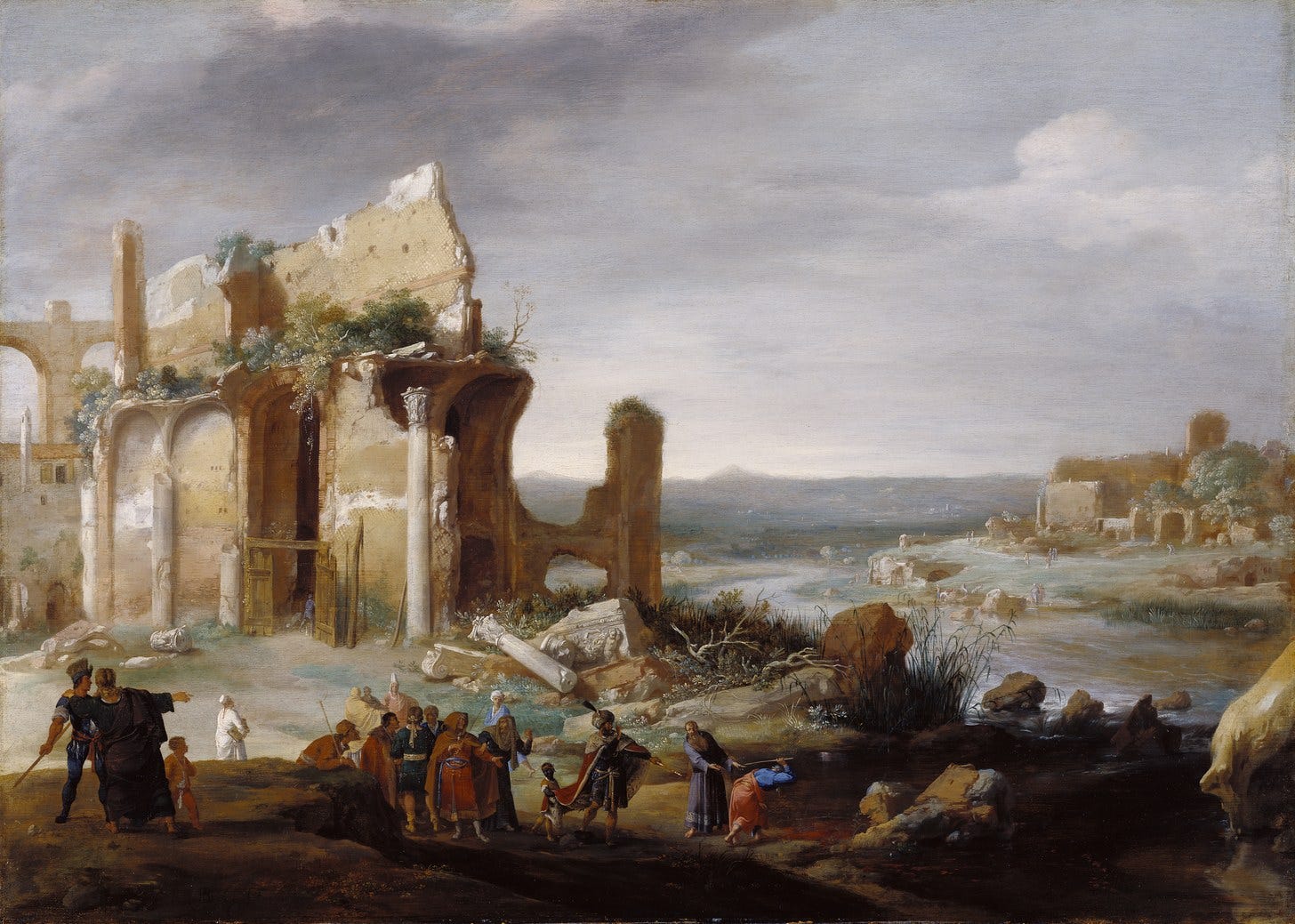
Thus says the LORD, "By this you shall know that I am the LORD: behold, with the staff that is in my hand I will strike the water that is in the Nile, and it shall turn into blood."
Exodus 7:17
Historical Context
Exodus was written by Moses to a people who had known Egypt as the only world there was. For four hundred years the Hebrews had lived in the shadow of Pharaoh, and now, at the foot of Sinai and on the plains of Moab, they were being taught who their God actually is. The plagues are the classroom.
To understand the first plague, you have to understand the Nile. Egypt has almost no rainfall. The Nile is the reason Egypt exists. It irrigated the fields, watered the livestock, carried the trade, and its annual flood deposited the black silt that made the delta the breadbasket of the ancient world. The Egyptians knew this, and they worshipped it. Hapi was the god of the Nile's flooding. Khnum was said to be its guardian. The river itself was considered the bloodstream of Osiris. Pharaoh, going down to the water in the morning (verse 15), was almost certainly performing a religious rite at the riverbank.
So when the LORD tells Moses to meet him there, and to strike that specific water with that specific staff, this is not a random display of power. It is a direct confrontation. The God of slaves is challenging the gods of the empire on their own ground, at their own hour, in front of their own king.
The magicians replicate the sign (verse 22), which is why Pharaoh can shrug it off and walk home. But note what the text says in verse 21: the fish died, the river stank, the Egyptians could not drink. Whatever the magicians did, they could not undo what the LORD had done. Seven days the river ran dead.
Reflection
There is a warning in this passage that is easy to miss because we do not worship rivers.
Egypt trusted the Nile. Not casually. Structurally. Their food, their economy, their theology, their identity, all of it flowed from that water. And the LORD struck precisely there. He did not begin with Pharaoh's army or Pharaoh's palace. He began with the thing Egypt could not live without and could not imagine losing.
God often works this way. When he moves against sin in a person's life, he tends to move against the thing that person is quietly counting on instead of him. The career that has become the measure of your worth. The relationship you cannot picture yourself without. The bank account that lets you sleep at night. The reputation you protect more carefully than your soul. These are the Niles. And a merciful God will sometimes let them stink in your nostrils so that you finally look up.
Notice what Pharaoh does in verse 23: he turns and goes into his house, and does not take even this to heart. The plague came, and he refused to feel it. This is the terrifying possibility. You can watch your idols fail and still not repent. You can drink dust and still not turn. Hardness of heart is not the absence of evidence; it is the refusal to let evidence do its work.
The question the passage puts to us is not whether God is powerful enough to strike our Niles. He is. The question is whether, when he does, we will take it to heart, or whether we will walk back into the house and pretend nothing happened. Every plague is a mercy if it drives you to your knees.
For Reflection
What is the Nile in your life, the thing you are quietly counting on instead of God, and what would it take for you to actually take it to heart?
Prayer
Father, you are the LORD, and there is no other. Forgive us for the rivers we have trusted more than we have trusted you. Strike our idols if you must. Make them stink in our nostrils rather than let us drink from them one day longer. Give us soft hearts that receive your warnings as mercy, not hardness that shrugs and walks home. Teach us to serve you alone, through Jesus Christ our Lord, in whose name we pray, Amen.
Paid subscribers get the study section below: the word behind the English, the setting, and where this thread runs through the rest of Scripture.