

Today's Verse
But the midwives feared God; they did not do as the king of Egypt commanded them, but they let the boys live.
Exodus 1:17
Historical Context
Exodus opens roughly four centuries after Joseph. The seventy souls who came down to Egypt (Genesis 46:27) have become a nation, exactly as God promised Abraham (Genesis 15:5). But the political landscape has shifted. A new dynasty has risen, most likely after the expulsion of the Hyksos rulers, and it has no memory of, or gratitude toward, the Hebrew vizier who once saved Egypt from famine.
Pharaoh's fear is demographic and military. Pithom and Rameses, the store cities the Israelites build, are historical sites in the eastern Nile Delta, the region called Goshen where Jacob's family settled. Forced labor in mud brick was the standard tool of Egyptian imperial projects. Anyone who has stood in an Egyptian museum has seen the tomb paintings: rows of foreign laborers mixing straw and clay under the whip of an overseer.
The order to the midwives is the first recorded state-sponsored infanticide in Scripture. Shiphrah and Puah are named while Pharaoh, the god-king, is not. Moses is writing history the way God sees it. In Egyptian religion, Pharaoh was divine and the Nile was a god; throwing Hebrew boys into the Nile was not just murder but a kind of offering to the river-god who was supposed to sustain Egyptian life.
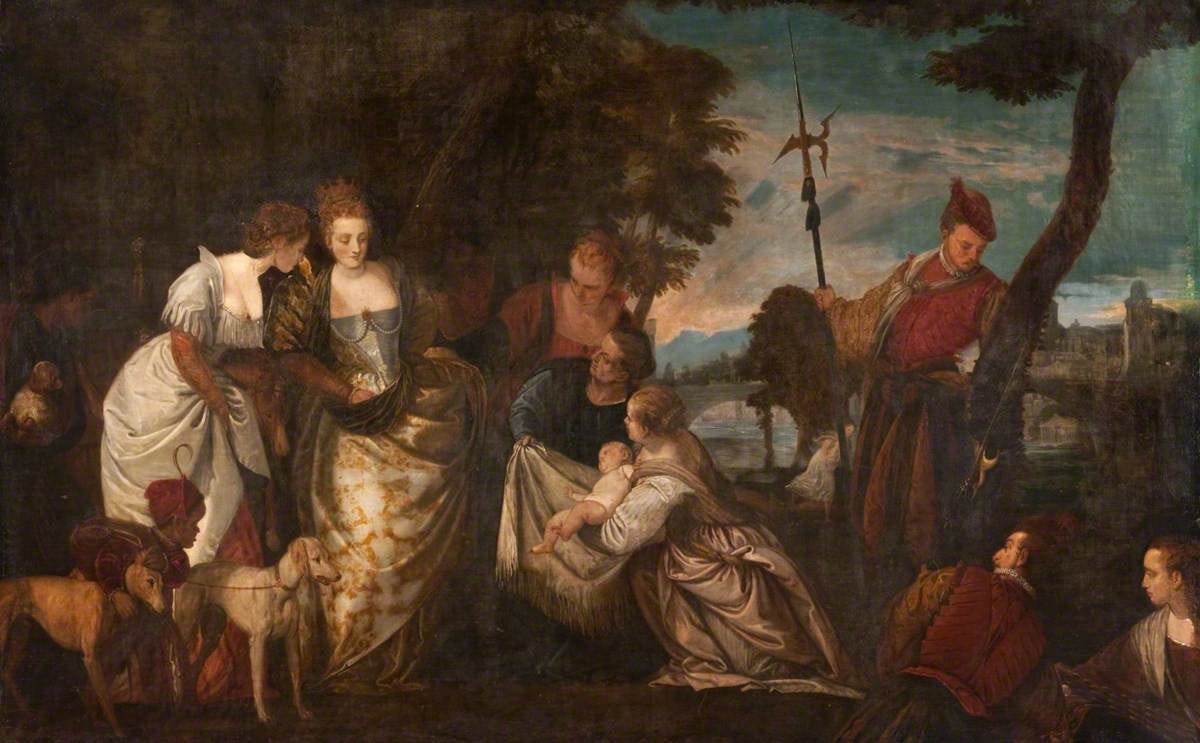
Into this setting a Levite couple, later named as Amram and Jochebed (Exodus 6:20), conceive a son. The papyrus basket Jochebed builds is called a tevah in Hebrew, the same word used for Noah's ark. Only these two objects in the whole Bible bear that name. A mother in Goshen, weaving reeds and smearing pitch, is unknowingly building a small ark of salvation, and God is beginning the rescue of His people through a baby drawn out of the water.
Reflection
Pharaoh had armies, treasuries, monuments, and the authority of a god on earth. Shiphrah and Puah had a birthstool and the fear of the Lord. Scripture leaves no doubt which was the greater power.
The fear of God is not anxiety about God. It is a settled reverence that reorders every other fear. When Pharaoh's order came down, the midwives had to choose which throne they actually served. They chose the higher one, and it cost them nothing less than the risk of their lives. Notice what the text emphasizes: not their courage, not their cleverness, but their fear of God. Everything else flowed from that.
We live under governments and cultures that increasingly demand we hand over the unborn, the elderly, the confused teenager, the inconvenient conscience. The pressure is rarely as blunt as Pharaoh's. It comes as policy, as career consequence, as social cost, as the quiet suggestion that going along is the reasonable, adult thing to do. And the question underneath every version of that pressure is the same question Shiphrah and Puah answered: whom do you actually fear?
God does not promise the fearful believer a comfortable ride. He does promise that no act of quiet obedience is lost. The midwives get one verse of defiance and a whole line in the story of redemption. Because they refused to kill Hebrew boys, one Hebrew boy lived, was drawn from the water, and led God's people out of slavery. And beyond Moses stands the greater Deliverer, hunted by another king at another slaughter of the innocents, who came up out of Egypt to save His people from their sins.
Fear God. The rest will keep.
For Reflection
Where in your life right now is the fear of man competing with the fear of God, and what would obedience actually cost you?
Prayer
Father, teach us to fear You rightly, so that no other fear can rule us. Give us the quiet courage of Shiphrah and Puah, who chose reverence over survival and trusted You with the outcome. Where we have gone along with what You hate, forgive us. Where we must stand, strengthen us. And thank You for the greater Deliverer, Jesus, who was hunted as a child and yet came to save us from every tyranny, especially the tyranny of our own sin. In Jesus' name, Amen.
Paid subscribers get the study section below: the word behind the English, the setting, and where this thread runs through the rest of Scripture.