

Today's Verse
Truly I tell you, just as you did it to one of the least of these brothers and sisters of mine, you did it to me.
Matthew 25:40
Historical Context
Matthew writes this Gospel for the early church in the decades after the Resurrection, probably in the 70s or 80s, when the temple has fallen and the shape of Christian life under pressure is being hammered out. Chapter 25 sits inside the Olivet Discourse, Jesus's last long teaching before the cross. He is on the Mount of Olives, looking across at Jerusalem, and he is telling his disciples what the end will be like and how to live until it comes.
The sheep and goats passage is the climax of three parables about the return of the Son of Man. The ten virgins warn about readiness. The talents warn about faithful stewardship. The sheep and goats show the verdict itself. Matthew's first readers would have heard the shepherd imagery against the whole Old Testament backdrop: God as the true Shepherd of Israel in Ezekiel 34, judging between sheep and sheep, and the promised Davidic shepherd-king who would gather the scattered flock. Many lectionaries pair the two passages on this Sunday.
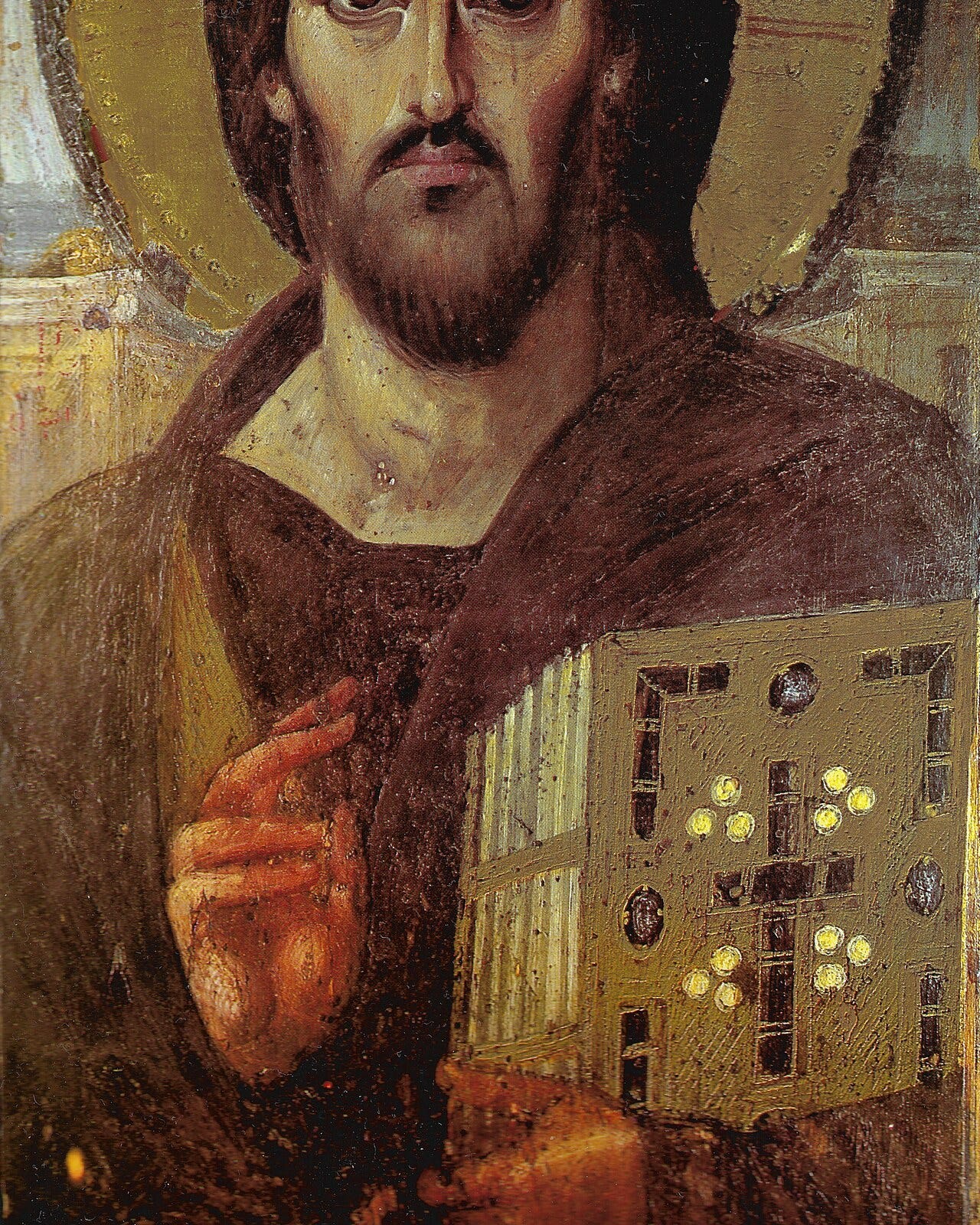
"Son of Man" is Jesus's favorite title for himself, drawn from Daniel 7, where one like a son of man receives an everlasting kingdom from the Ancient of Days. Here Jesus openly claims that figure. He is the Shepherd. He is the King. He is the Judge seated on the throne of glory. And the ones he calls "the least of these brothers and sisters of mine" are, in Matthew's vocabulary, his disciples: the hungry missionary, the imprisoned believer, the naked stranger bearing his name. This is how the Church Year ends: with Christ enthroned, and with the question of whether we knew him when we saw him.
Reflection
Today the Church Year closes where history itself will close: with Christ on the throne of his glory. Every lectionary cycle has been teaching us to see him, and now he comes to be seen by everyone. The nations are gathered. The angels stand by. The Shepherd of Psalm 23 is also the Judge of all the earth, and the gentleness and the severity belong to the same Lord.
We need to let this passage hit us where it actually lands. Works of mercy do not earn heaven apart from faith in him. What Jesus describes is how real faith in him produces a particular kind of life, and that life has a shape you can see. It feeds. It welcomes. It clothes. It visits the prison cell and the sickbed. The righteous in this parable are surprised because they never kept score. Mercy had simply become their reflex. The accursed are surprised too. They assumed that doing no harm was the same as righteousness.
And Christ hides himself in the hungry believer, the persecuted Christian, the stranger who shows up at church with nothing. To love him is to love them. To ignore them is to ignore him. There is no third category.
The passage also refuses to let us soften the ending. Eternal punishment is set in parallel with eternal life, by Christ's own words, in the same breath. Hell is real because love is real and judgment is real and he is telling the truth. But hear the good news inside the warning: the King already knows your name. He went to the cross for sheep who had wandered. Today, while the throne is still a mercy seat, come to him and let his mercy become your reflex.
For Reflection
Where in your ordinary week is Christ hiding in someone you have been too busy, too tired, or too suspicious to see?
Prayer
Lord Jesus, King of glory and Shepherd of our souls, we bow before the throne you will one day sit upon in sight of all the nations. Give us eyes to see you in the hungry, the stranger, the prisoner, and the suffering members of your body. Make mercy the habit of our hearts. Forgive us for the faces we have overlooked. Clothe us in your righteousness, and on that day, speak our names among the blessed of your Father. In your name we pray, Amen.
Paid subscribers get the study section below: the word behind the English, the setting, and where this thread runs through the rest of Scripture.