

Today's Verse
While they were worshiping the Lord and fasting, the Holy Spirit said, 'Set apart for me Barnabas and Saul for the work to which I have called them.'
Acts 13:2
Historical Context
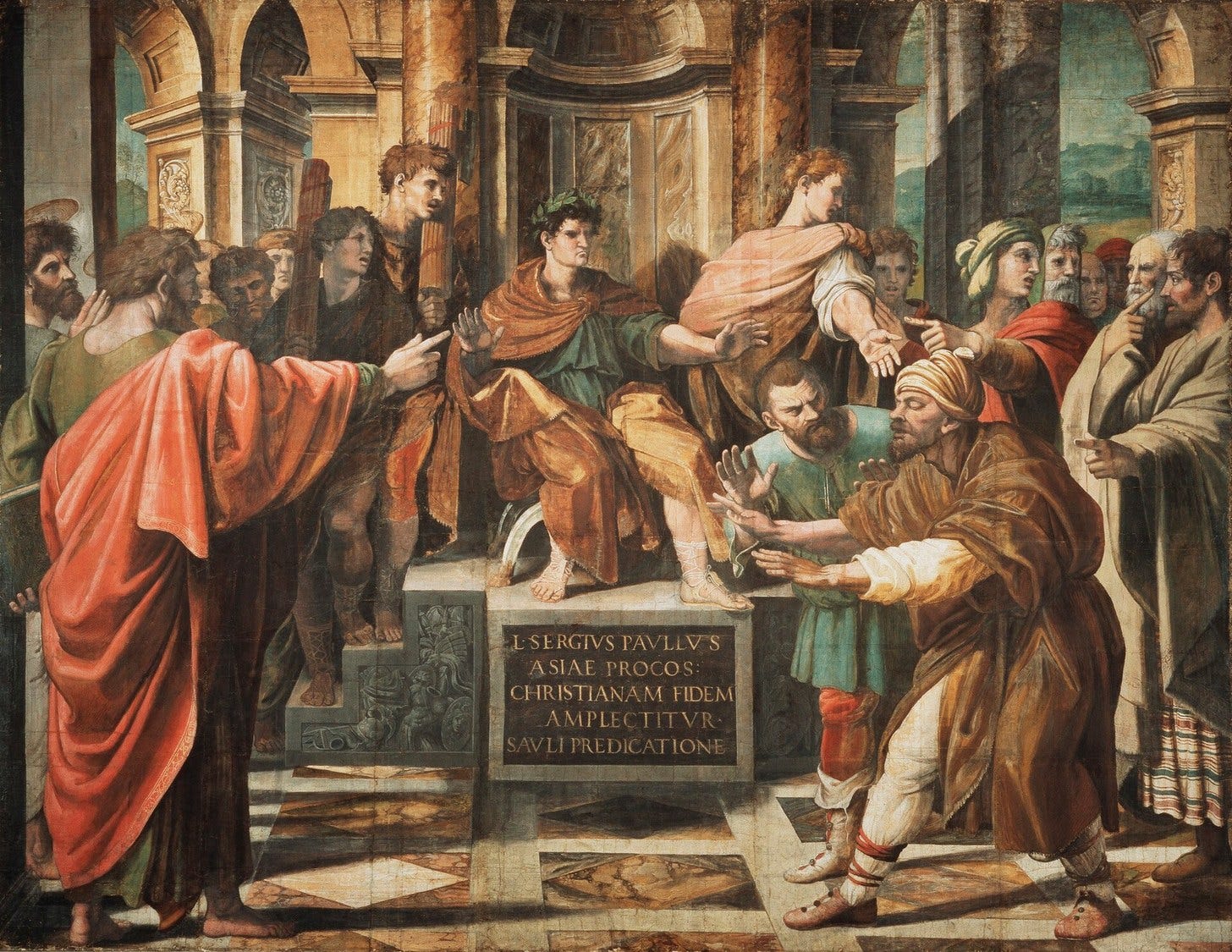
Luke probably wrote Acts in the early 60s AD as the second volume of his orderly account to Theophilus, picking up where his Gospel ended. By Acts 13 the story shifts decisively. Jerusalem recedes, and Antioch in Syria, the third largest city of the Roman Empire, becomes the launching pad for the gospel's push into the Gentile world. It was in Antioch that disciples were first called Christians (Acts 11:26), and the church there was strikingly multiethnic: Barnabas the Cypriot Levite, Simeon called Niger (likely African), Lucius from Cyrene in North Africa, Manaen raised in the court of Herod Antipas, and Saul the Pharisee from Tarsus. This was no homogeneous clique. Cyprus, their first stop, was Barnabas's homeland, and its synagogues gave the missionaries a natural starting point (Acts 13:5). Salamis sat on the eastern coast; Paphos, the Roman administrative capital, on the western. Luke calls Sergius Paulus 'a man of intelligence' who sent for Barnabas and Saul because he wanted to hear the word of God (Acts 13:7). Court magicians like Bar-Jesus (Elymas) were common in the ancient world; wealthy officials often kept them as advisors, blending astrology, folk religion, and manipulation. Bar-Jesus had less excuse than most, because the Scriptures he knew plainly forbade sorcery (Deuteronomy 18:10-12). Note too that this is the chapter where Luke stops calling the apostle Saul and starts calling him Paul, and where Paul moves from second billing behind Barnabas to the leading role. A new era has begun, and Luke marks it quietly but unmistakably.
Reflection
Notice how the first missionary journey in church history begins. There is no planning session, no sign-up sheet, and no sign that Paul and Barnabas grew restless and decided it was time. It begins with a church worshiping and fasting, and the Holy Spirit speaking into that posture.
We tend to flip the order. We decide what we want to do for God, then ask Him to bless it. The Antioch church did the opposite. They gave themselves to worship with no agenda but God Himself, and in that empty-handed attention the Spirit's call became audible. Fasting gives God nothing He lacks. It is a way of saying, with our bodies, that we want Him more than we want the next meal, the next distraction, the next noise. In that quiet, direction comes.
And when the sent ones arrive, they meet opposition immediately. Elymas knows religion well. Luke calls him a false prophet, close enough to the truth to counterfeit it, positioned to whisper in the proconsul's ear. Some of the gospel's most effective opponents have been people fluent in religious language who preferred their own influence to the straight paths of the Lord. Paul does not negotiate. Filled with the Spirit, he names the man a son of the devil and announces blindness, and darkness falls.
That may jar modern ears, but it clarifies something we need to see: the gospel is the kingdom of God advancing, and it meets real resistance from real spiritual powers. The proconsul believed when he saw which power was greater. Pray for your pastors. Pray for the missionaries your church sends. The work is dangerous, and it belongs to God.
For Reflection
Where in your life have you been asking God to bless your plans rather than quieting yourself long enough to hear His?
Prayer
Father, teach us to worship You without agenda. Still the noise of our ambitions long enough to hear Your Spirit's voice. Give our churches the courage of Antioch to send our best, and the discernment of Paul to name darkness for what it is. Protect those You have sent out, and make Your gospel advance in places where it is opposed. We want more of You than we want our own plans. In Jesus' name, Amen.
Paid subscribers get the study section below: the word behind the English, the setting, and where this thread runs through the rest of Scripture.