

Today's Verse
So she called the name of the LORD who spoke to her, "You are a God of seeing," for she said, "Truly here I have seen him who looks after me."
Genesis 16:13
Historical Context
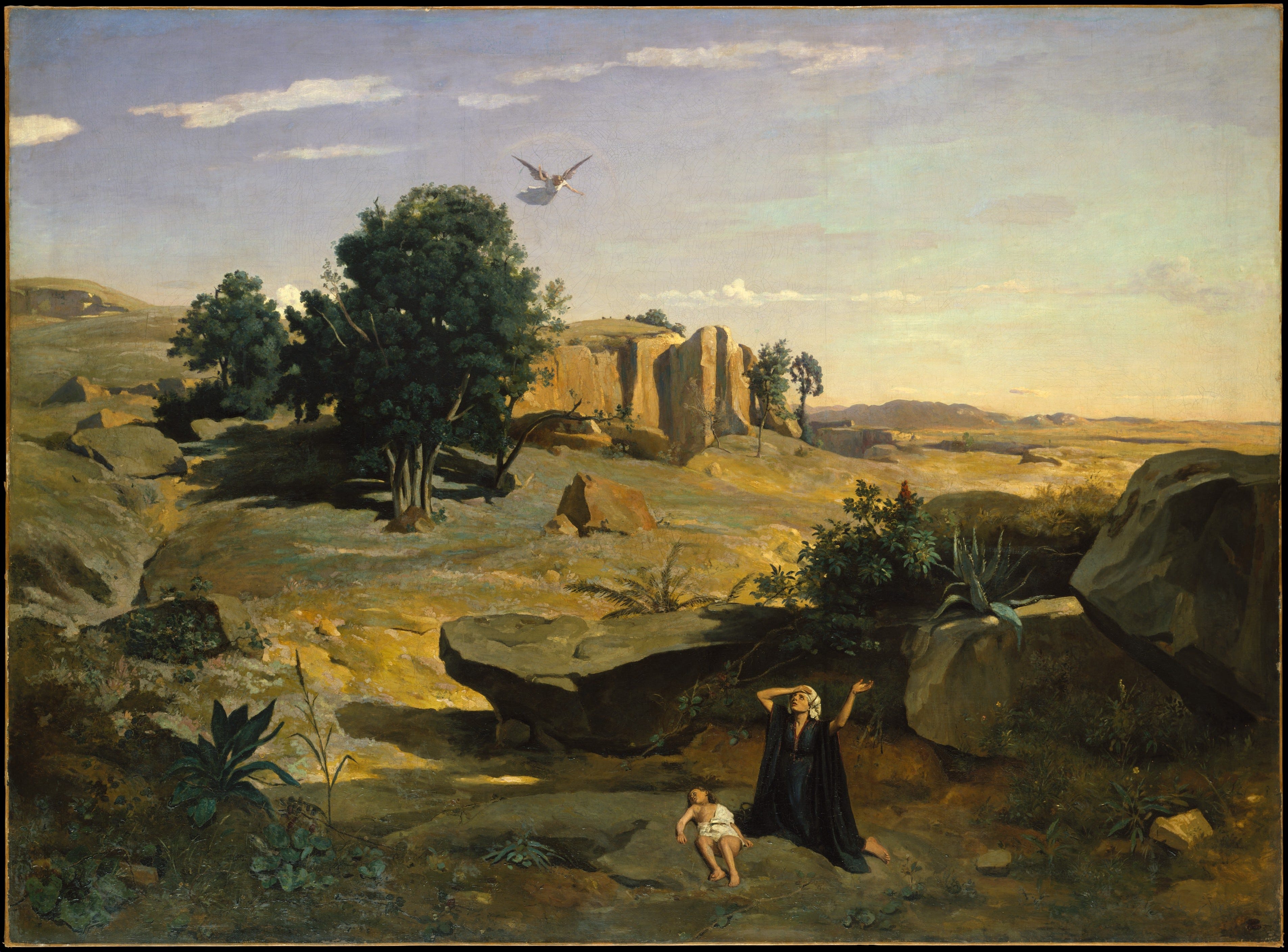
Genesis was given to Israel through Moses, and the original hearers were a people who had themselves been slaves in Egypt. So when they heard about Hagar — an Egyptian slave woman, pregnant, mistreated, fleeing into the wilderness — they would have felt the sting of recognition. Abram and Sarai are about ten years into the promise. God has sworn an heir, but Sarai is still barren, and she does what the surrounding cultures of the ancient Near East routinely did: she gives her servant to her husband as a surrogate. Legal codes from places like Nuzi attest to the practice. It was culturally normal. It was not, however, the way of the LORD. The result is contempt, jealousy, harsh treatment, and a woman running for her life with a child in her womb. Into this mess — a mess Abram and Sarai made by trying to help God keep His promise — the angel of the LORD shows up at a desert spring. He does not lecture Hagar. He asks her where she is going, gives her a promise, and is named by her: El Roi, the God who sees.
Reflection
Hagar is the kind of person the world overlooks. A foreigner. A slave. A woman used as a means to someone else's end, then blamed when the plan blew up. She has no advocate, no standing, no future she can see. And the angel of the LORD finds her — not in the tent of the patriarch, but at a spring in the wilderness, on the run.
Notice what He does. He calls her by name. He acknowledges her affliction ("Ishmael" means "God hears"). He gives her a hard word — go back, submit — and a hopeful word — your son will live, your offspring will be many. And Hagar, the Egyptian slave, becomes the first person in Scripture to give God a name: "You are a God of seeing."
This matters for you. You may feel invisible — to your family, your coworkers, your church. You may be carrying consequences for somebody else's sin, or your own, and the wilderness feels like the only honest place left. Hear this: the same Lord who found Hagar sees you. He is not a distant deity managing the universe from afar. In Christ He has come into the wilderness Himself, taken our affliction into His own body on the cross, and risen to find every runaway He intends to save.
But notice also: His seeing is not sentimental. He sent Hagar back. He often sends us back too — back to repent, back to submit, back to the hard place where He will be faithful. The God who sees is the God who saves, and the God who saves is the God who is Lord.
For Reflection
Where in your life right now do you most need to believe that God actually sees you — and what would change if you did?
Prayer
Father, You are the God who sees. You saw Hagar at the spring, and You see us in our wildernesses, our hidden afflictions, our running. Thank You that in Christ You came to find us and bore our affliction on the cross. Give us courage to be seen by You honestly — without hiding our sin or our sorrow — and grace to go where You send us. Teach us to trust Your promises rather than engineer our own. In Jesus' name, Amen.
Recent Devotionals
Hoping Against Hope With Father Abraham — *June 7, 2026*
The Viper, the Fire, and the Servant's Hand — *June 5, 2026*
Lot Lifted His Eyes Toward Sodom — *June 4, 2026*
Image: Jean-Baptiste-Camille Corot, Hagar in the Wilderness, c. 1835, The Metropolitan Museum of Art, New York — Public Domain (Met Open Access) via Wikimedia Commons.
Scripture quotations are from the ESV® Bible (The Holy Bible, English Standard Version®), copyright © 2001 by Crossway, a publishing ministry of Good News Publishers. Used by permission. All rights reserved.