

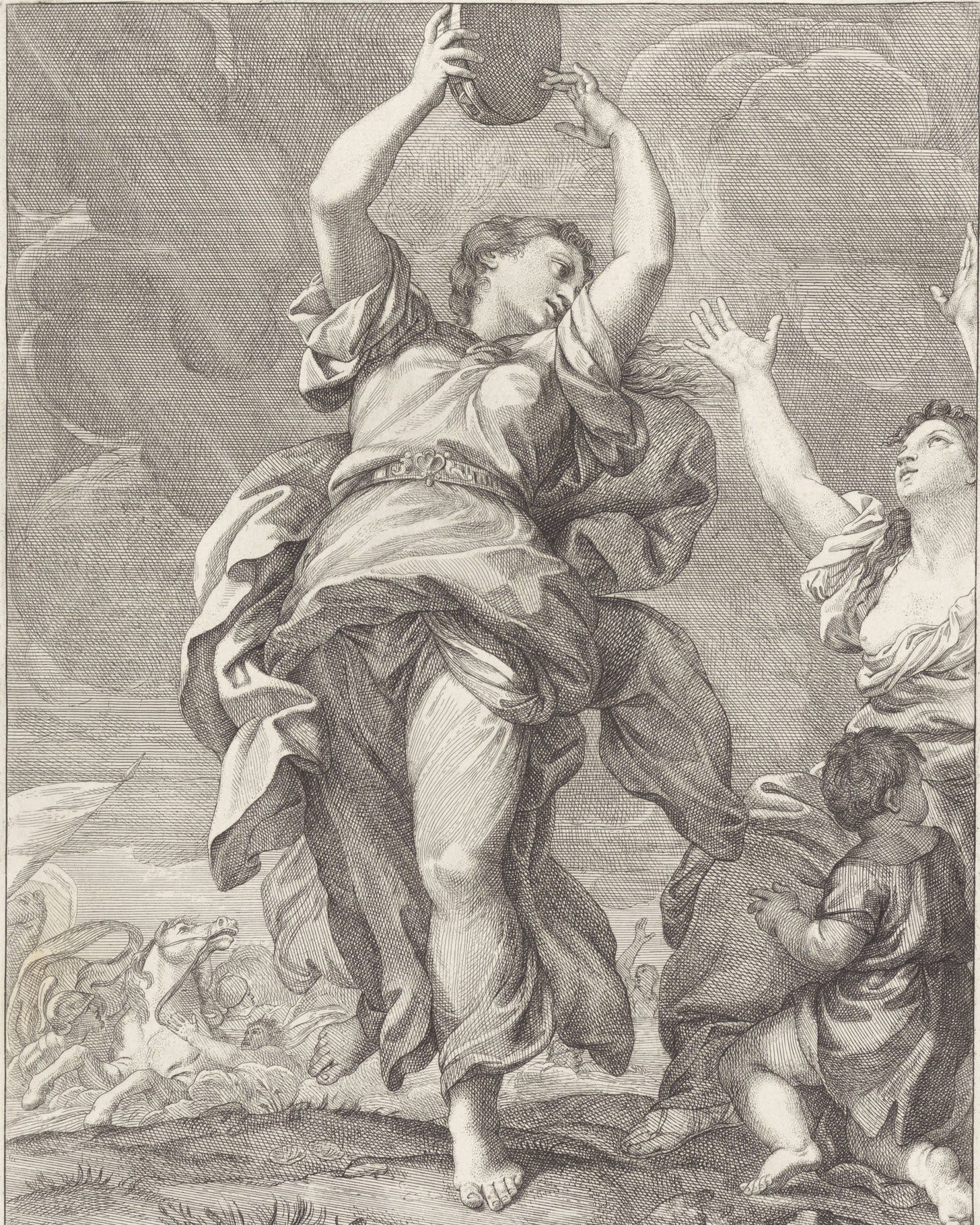
Today's Verse
Then Miriam the prophetess, the sister of Aaron, took a tambourine in her hand, and all the women went out after her with tambourines and dancing. And Miriam sang to them: 'Sing to the LORD, for he has triumphed gloriously; the horse and his rider he has thrown into the sea.'
Exodus 15:20-21
Historical Context
Exodus 15 sits at the hinge of the whole book. Chapters 1-14 build the crisis: slavery in Egypt, the plagues, the Passover, the terrifying night crossing of the Red Sea. Chapter 15 is the response, the first thing Israel does as a free people. They sing.
Verses 1-18 record the Song of Moses, a long poetic account of what the Lord has just done. Verses 19-21 are the counterpart: Miriam and the women answering back. This antiphonal pattern, a leader singing and the people responding, was standard in the ancient Near East for victory celebrations. When a king came home from battle, the women went out with tambourines and dance to meet him. Miriam is doing exactly that, but the returning king is the Lord himself.
Miriam is called a prophetess here, the first woman in Scripture given that title. She is also identified as the sister of Aaron, likely the same sister who watched over the infant Moses in his basket on the Nile (Exodus 2:4-8). The girl who once stood by the water hoping her baby brother would live now stands by another body of water leading Israel in worship because that baby brother has led them through.
The tambourine, in Hebrew the tof, was a small hand drum, the ordinary instrument of celebration. This is not temple liturgy: there is no temple yet. This is the raw, spontaneous worship of people who have just watched their oppressor drown. The date is roughly 1446 BC on the traditional reckoning. Israel has been in Egypt for four hundred years. The wilderness lies ahead. But first, they sing.
Reflection
Notice what Miriam does not sing about. She does not sing about how brave Israel was, or how they finally got what they deserved, or how they pulled through together. She sings about the Lord. He has triumphed. He threw the horse and rider into the sea. The song is entirely God-ward.
This is the shape of true worship, and it matters because we are prone to the opposite. When God rescues us from something, our instinct is often to tell the story of our own endurance. We survived the diagnosis. We got through the divorce. We made it out of the addiction. Miriam will not let us. The first song on the other side of the sea gives every ounce of credit to God.
And notice that she sings. She does not just think grateful thoughts or feel privately moved. She picks up a tambourine, gathers other women, and makes noise. Worship in Scripture is embodied and public. The saved cannot stay quiet. If Christ has brought you through your own Red Sea, through the judgment your sin deserved, through the grave itself by his resurrection, then silence is a strange response. Sing. Tell someone. Gather with the church on Sunday and open your mouth.
There is also a warning here. The Egyptians drowned. God's deliverance of his people was, at the same time, God's judgment on those who set themselves against him. We flatten the gospel when we speak only of rescue and never of the sea closing over Pharaoh. The cross saves those who trust Christ. It does not save those who reject him. Miriam sings on the shore of that reality, and so must we.
For Reflection
When God has clearly delivered you from something, is your instinct to tell the story about him or about yourself?
Prayer
Father, you are the God who saves. You parted the sea for Israel and you parted death itself in the resurrection of your Son. Forgive us for the times we take credit for what only your hand has done. Loosen our tongues to praise you, and give us the courage to sing where others can hear. Teach us to worship you with our whole bodies and our whole lives, until the day we stand on the far shore and sing forever. In Jesus' name, Amen.
Paid subscribers get the study section below: the word behind the English, the setting, and where this thread runs through the rest of Scripture.