

Today's Verse
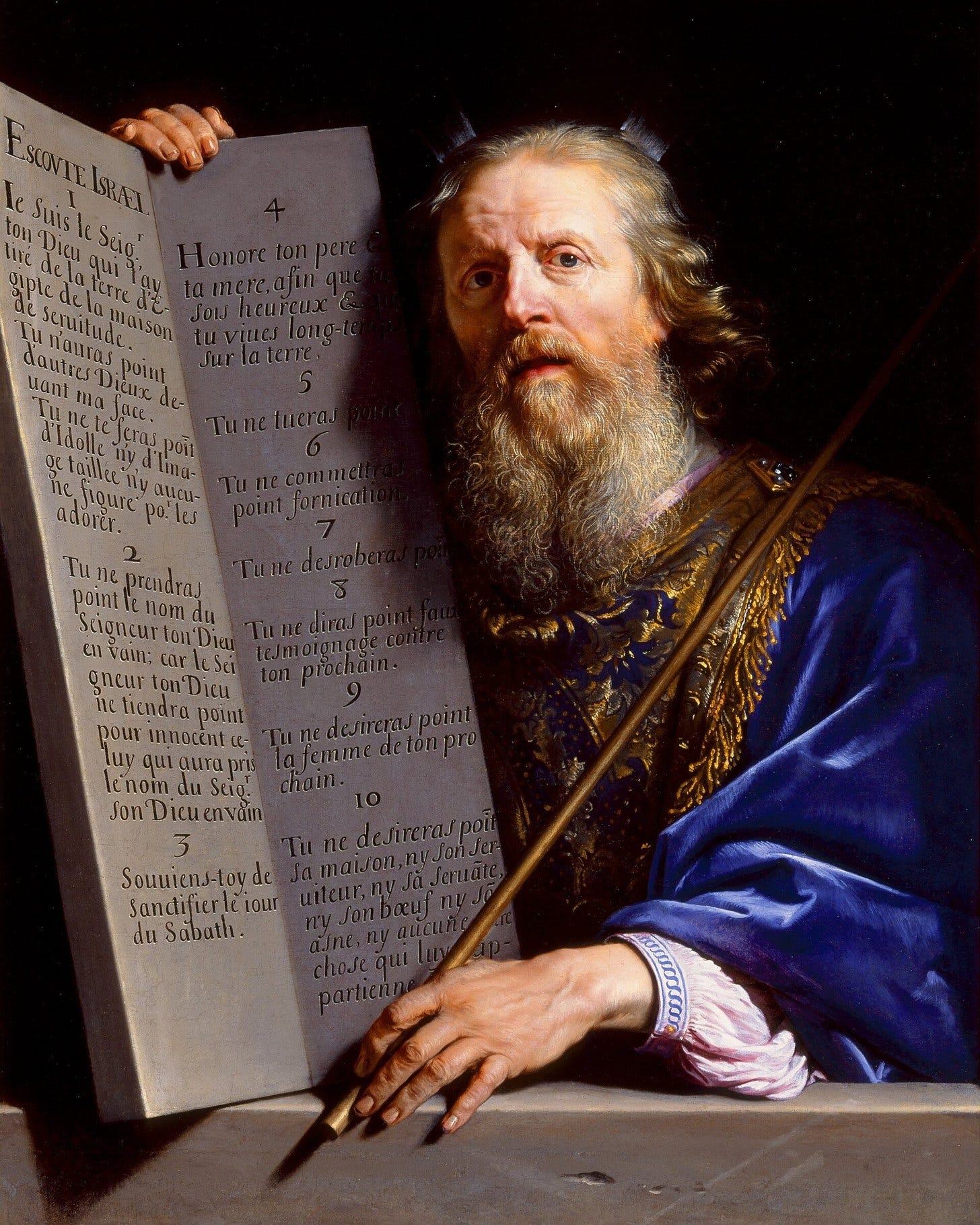
When Moses came down from Mount Sinai, with the two tablets of the testimony in his hand as he came down from the mountain, Moses did not know that the skin of his face shone because he had been talking with God.
Exodus 34:29
Historical Context
Exodus 34 sits in the aftermath of catastrophe. Israel had made the golden calf while Moses was on the mountain receiving the law. God's wrath burned, Moses interceded, the tablets were broken, judgment fell, and the covenant hung by a thread. In chapter 33 Moses pressed in: show me your glory. God hid him in the cleft of the rock, passed by, and proclaimed his name as merciful and gracious, slow to anger, abounding in steadfast love. Chapter 34 is the covenant renewed. New tablets are cut, the terms are restated, and Moses spends another forty days on Sinai without bread or water, in the presence of God.
Our passage is what happens when he comes back down. The Hebrew wording in verse 29 is striking: the skin of his face had become radiant, and he himself was unaware of it. Prolonged nearness to the holy God left a visible mark on his body. Israel, having so recently danced before a golden idol, now cannot bear to look at the face of the man who has been with the true God. They are afraid.
The veil Moses adopts is not vanity or false modesty. It is a mercy to a people whose consciences are tender from recent rebellion, and, as Paul will later tell us in 2 Corinthians 3, it also hides the fact that the glory is fading. Moses is a mediator. He goes in unveiled before the LORD, comes out shining, speaks the words of God to Israel, and veils his face again. The whole scene prepares us for a better Mediator still to come.
Reflection
People who spend time with God start to look different, and they are usually the last ones to notice. Moses did not come down from Sinai preening about his face. He did not know. The glory was not a performance he put on; it was a residue he carried. Those around him saw it before he did.
That is a quiet test for us. The Christian who is genuinely close to the Lord rarely advertises it. They do not inform you of their prayer life. They do not drop their devotional habits into conversation. But something about them is lit from a source you cannot see. Patience where you expected irritation. Steadiness in bad news. Kindness to someone who did not earn it. Honesty that costs them something. The face shines, and they do not know.
The inverse is also true, and it is sobering. If we spend our hours with screens, with grievance, with ambition, with the endless churn of outrage, our faces take on that cast too. We become what we behold. There is no neutral exposure. The question is not whether you are being formed, but by what.
And here is the hope the passage opens into. Moses had to veil a glory that was fading. In Christ, Paul says, the veil is taken away, and we all, with unveiled face, behold the glory of the Lord and are being transformed into the same image from one degree of glory to another. The shining is no longer borrowed for a few hours on a mountain. It is the Spirit's slow, permanent work in anyone united to the risen Christ. Sit with him. You will not stay the same.
For Reflection
Where in your life have you noticed someone quietly shining with the character of Christ, and what were they beholding to become that way?
Prayer
Father, we confess how easily we are shaped by lesser things, by noise and grievance and the glow of our screens. Draw us back to yourself. Teach us to sit unhurried in your presence, to behold the face of your Son, and to be changed by what we see. Make us the kind of people whose lives quietly witness to time spent with you, even when we do not know it. In Jesus' name, Amen.
Paid subscribers get the study section below: the word behind the English, the setting, and where this thread runs through the rest of Scripture.