

Today's Verse
We remember the fish we ate in Egypt that cost nothing, the cucumbers, the melons, the leeks, the onions, and the garlic. But now our strength is dried up, and there is nothing at all but this manna to look at.
Numbers 11:5-6
Historical Context
Numbers picks up about a year after the exodus. Israel has been camped at Sinai receiving the law, building the tabernacle, and organizing for the march to Canaan. In chapter 10 they finally break camp. By chapter 11 they have been on the road only three days and the complaining begins.
Moses wrote Numbers (the Hebrew title is Bemidbar, 'in the wilderness') for the generation preparing to enter the land, and for every generation after them. The book is largely a record of what went wrong, so the next generation would not repeat it.
Two details in this passage need unpacking. First, 'the rabble' in verse 4 translates a Hebrew word for a mixed crowd, the non-Israelites who left Egypt with them (see Exodus 12:38). The craving starts on the fringes and spreads inward. Second, the menu Israel misses (fish, cucumbers, melons, leeks, onions, garlic) is a fair description of the actual Egyptian peasant diet along the Nile. They are not making it up. What they are omitting is the slavery that came with it: the straw, the bricks, the murdered infants, the groaning that reached God's ears in Exodus 2.
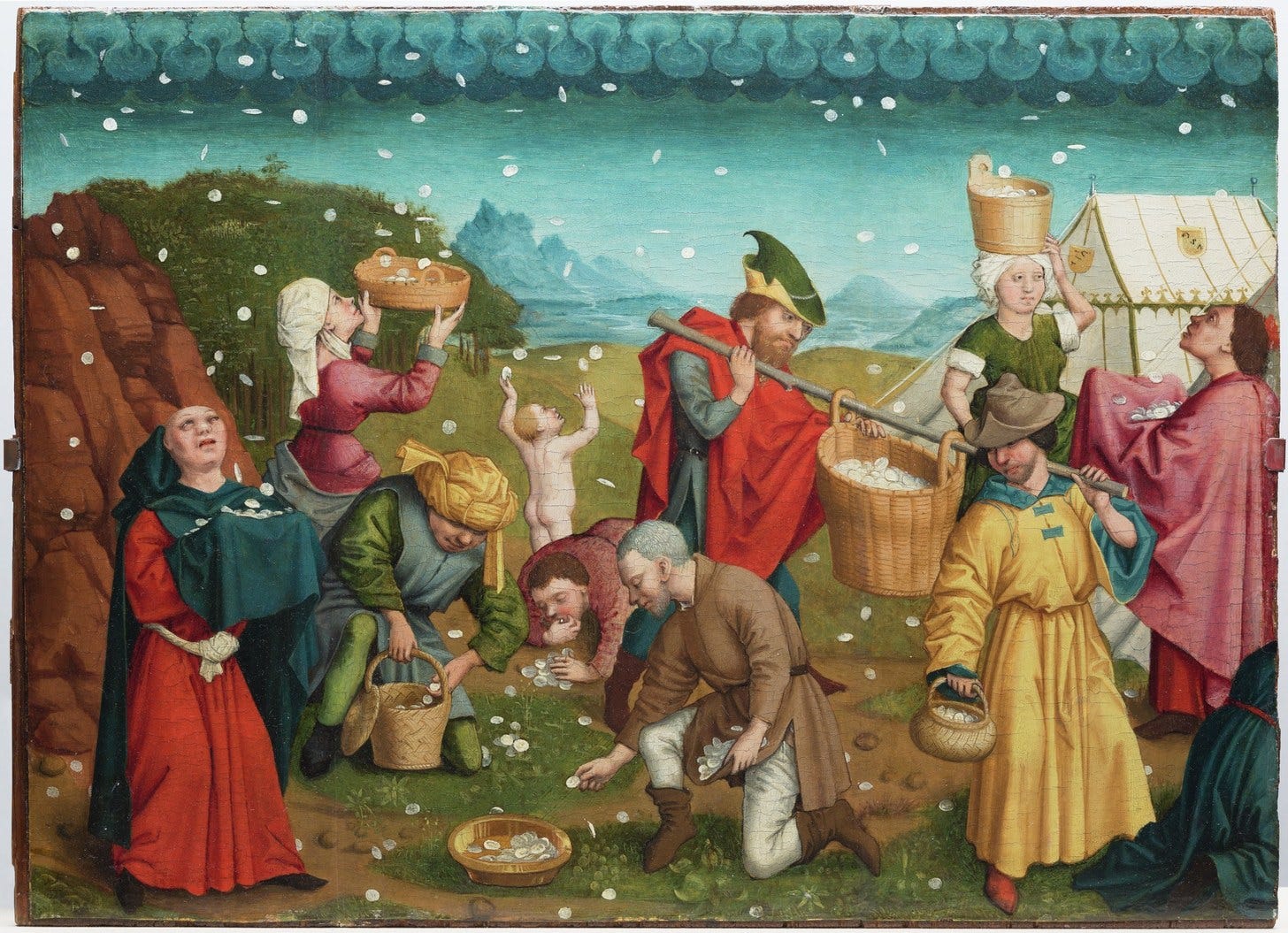
The manna, meanwhile, was miraculous provision. Small, pale, coriander-shaped flakes appeared with the dew every morning for forty years. It could be ground, boiled, or baked. It kept them alive. And a year in, they are sick of the sight of it. That is the setting: fed by God's hand daily, and bored of it. The fire at Taberah in verses 1-3 is the warning shot. The craving in verses 4-9 shows they did not hear it.
Reflection
Israel's memory has been edited. The fish 'cost nothing,' they say, as if slavery were a bargain. They list six vegetables and forget the whip. This is what sin does to the mind. It sharpens the pleasures we left behind and blurs the price we paid for them.
Every Christian knows this trick. You walked away from something (a relationship, a habit, a way of numbing yourself, a place you should not have been) and God has been feeding you daily ever since. Not lavishly, perhaps. Not with variety. But faithfully. Manna every morning. And then one ordinary Tuesday, the craving comes back, and what returns to your mind is not the shame or the emptiness but the taste. The garlic. The onions. The thing you told yourself you would never miss.
Notice what Israel actually says: 'there is nothing at all but this manna.' Nothing but bread from heaven. Nothing but the daily miracle of a God who feeds His people in a desert where nothing grows. When our hearts are wrong, gifts look like deprivation and grace looks like scarcity.
The fire at Taberah should terrify us more than it does. God is not indifferent to the grumbling of His people. He hears it. He takes it as an insult, because it is one. To despise the manna is to despise the Giver.
The remedy is not to work up gratitude by force. It is to remember truthfully. Remember what He brought you out of. Remember what it cost Him: not cucumbers, but the body and blood of His Son, the true Bread from heaven. Taste that again and the old menu loses its pull.
For Reflection
What 'onions of Egypt' has your memory been polishing lately, and what did that life actually cost you?
Prayer
Father, forgive us for the short memory of our hearts. We have called Your daily provision boring and Your deliverance small. Teach us to remember truthfully: what You saved us from, what it cost Your Son, and how faithfully You have fed us since. Kill the cravings that would drag us back to Egypt. Give us hunger for the true Bread from heaven, and satisfy us in Him this morning and every morning. In Jesus' name, Amen.
Paid subscribers get the study section below: the word behind the English, the setting, and where this thread runs through the rest of Scripture.