

Today's Verse
You shall tell your son on that day, 'It is because of what the LORD did for me when I came out of Egypt.' And it shall be to you as a sign on your hand and as a memorial between your eyes, that the law of the LORD may be in your mouth.
Exodus 13:8-9
Historical Context
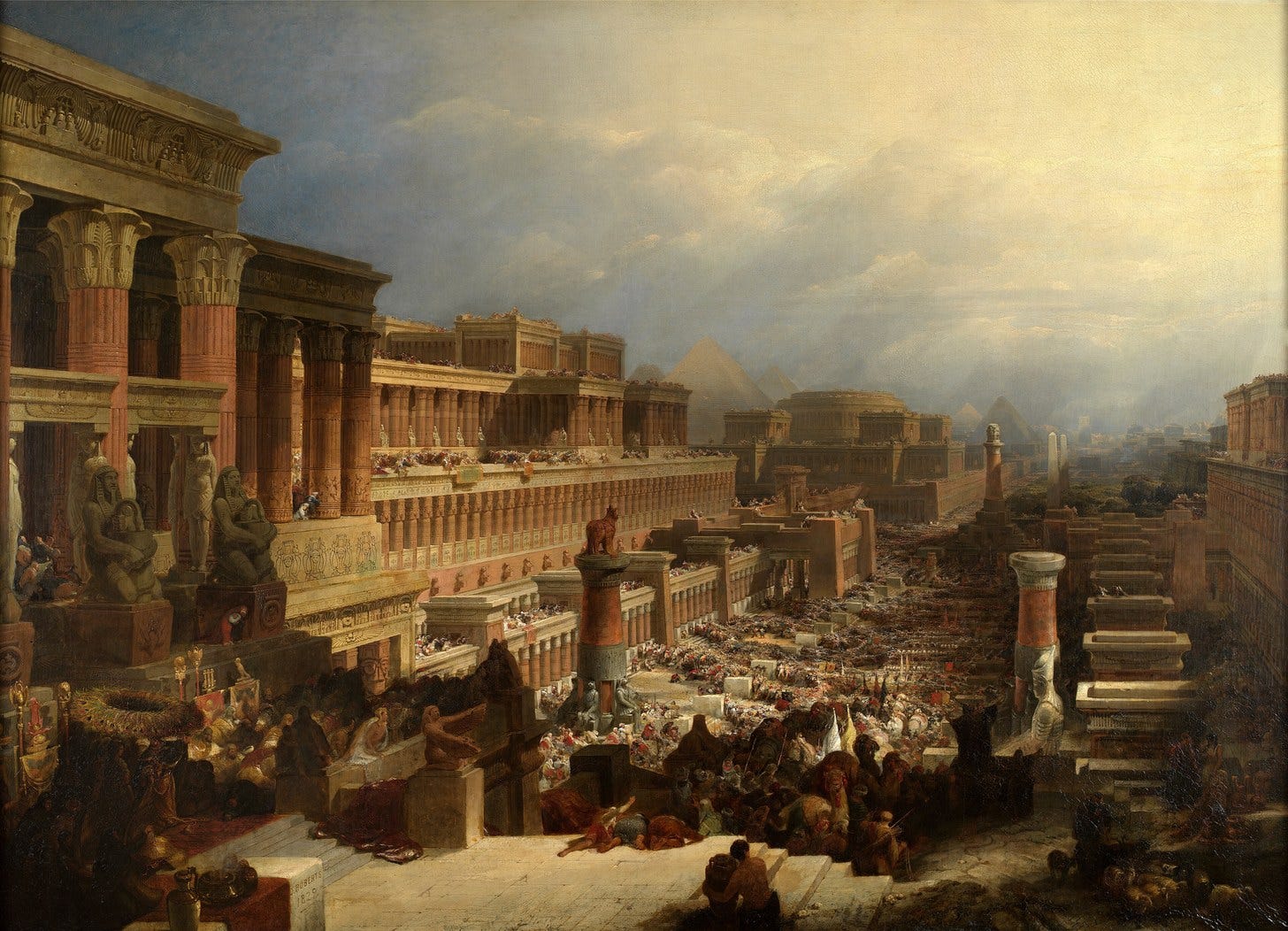
Exodus 13 comes the morning after the tenth plague. The firstborn of Egypt lie dead, Pharaoh has finally broken, and Israel is walking out of the only country most of them have ever known. They are carrying kneading bowls on their shoulders because there was no time to let the dough rise (Exodus 12:34).
Into this moment of raw departure, God speaks. Before Israel has crossed the sea, before they have tasted manna, before they have reached Sinai, He gives Moses instructions about how this day is to be remembered. Consecrate the firstborn. Eat unleavened bread for seven days every year. Tell your children why.
The month is Abib, roughly our March-April, later called Nisan. The land God names, flowing with milk and honey, is still a promise on the horizon. The peoples listed, Canaanites, Hittites, Amorites, Hivites, Jebusites, are the current occupants of that promise.
The cultural weight of the firstborn matters here. In the Ancient Near East, the firstborn son inherited the double portion, carried the family name, and represented the family before God. By claiming every firstborn as His own, the Lord was staking a claim on the future of every household in Israel. And the sign on the hand and between the eyes, which later Judaism would embody in tefillin, was originally a metaphor for total saturation: what your hands do, what your eyes see, what your mouth speaks, all shaped by the memory of rescue. God was not merely founding a nation. He was founding a people whose identity would be rehearsed, year after year, at the family table.
Reflection
God knew His people would forget. That is the pressure behind this whole chapter. Within a generation, children would be born who had never seen a plague, never tasted the bitterness of slavery, never watched a lamb bleed for their family. So God builds remembering into the calendar, into the body, into the meal, into the conversation between father and child.
We are no different. The dramatic mercy of our conversion, the answered prayer, the season the Lord carried us through, all of it fades faster than we expect. Yesterday's rescue becomes today's assumption. And an unremembered mercy is a mercy that stops shaping us.
Notice what God does not do. He does not tell Israel to feel grateful in a general way. He gives them concrete practices. Eat this. Refuse that. Say these words to your children on this day. Faith is not left to float in the realm of sentiment; it is anchored in habits the body can perform even when the heart is dull.
This is why the Church gathers on the Lord's Day. Why we break the bread and share the cup. Why we teach our children the creed before they can understand every word of it. Why we pray at fixed hours and read the Scriptures on a schedule. These are not the death of living faith. They are its scaffolding.
And notice the audience: your son. The faith God gives you is not yours alone to enjoy privately. It is a deposit to be handed on. If the children in your house cannot tell you what the Lord has done for you, you have work to do, and the work begins with speaking.
For Reflection
What concrete practice could you build into your week or your family's rhythm to keep the Lord's rescue from fading into background noise?
Prayer
Father, You have rescued us at a cost we cannot measure, and we forget too easily. Teach us to remember. Give us hands that work, eyes that see, and mouths that speak of what You have done. Make our homes places where Your mighty acts are told plainly to our children. Anchor our faith in habits that hold us when feeling fails. And when we sit at Your table, let us taste again the freedom You bought for us. In Jesus' name, Amen.
Paid subscribers get the study section below: the word behind the English, the setting, and where this thread runs through the rest of Scripture.