

Today's Verse
Restore our fortunes, O LORD, like streams in the Negeb! Those who sow in tears shall reap with shouts of joy!
Psalm 126:4–5
Historical Context
Psalm 126 belongs to the Songs of Ascents (Psalms 120–134), fifteen short psalms pilgrims sang as they climbed the road up to Jerusalem for the great feasts. Picture families walking together for days, dust on their sandals, the temple drawing nearer with every step. These songs were the soundtrack of their journey home to worship.
This particular psalm looks back on a specific deliverance: the LORD restoring the fortunes of Zion. Most likely this refers to the return from Babylonian exile under Cyrus's decree in 538 BC, when the unthinkable happened — a pagan emperor sent God's people home. The first verses remember that moment with stunned wonder: "we were like those who dream." It seemed too good to be true. Even the surrounding nations took notice.
But then verse 4 pivots sharply. The same people who just sang of restoration now plead for it: "Restore our fortunes, O LORD." Why? Because the return from exile was real but partial. The temple was a shadow of Solomon's. The walls were rubble until Nehemiah. Foreign powers still ruled. Joy and longing lived in the same heart.
The image in verse 4 would land with force on pilgrims who knew the Negeb — the parched southern wilderness where dry riverbeds (wadis) could become roaring streams overnight when the rains came. That is the prayer: do it again, suddenly, abundantly.
Verses 5–6 then turn to the farmer's image of weeping at sowing time and shouting at harvest — the slow patience of faith between the seed and the sheaves.
Reflection
Most of us live in Psalm 126. We can look back and name real mercies — a conversion, a healing, a marriage saved, a prodigal who came home, a season when God broke through and we could hardly believe it. "The LORD has done great things for us; we are glad." That memory is not nostalgia. It is fuel.
But we also live in verse 4. Something is still dry. A child still wanders. A body still hurts. A sin still claws at us. A grief still aches. And we find ourselves praying the strange prayer of people who have already been rescued and still need rescue: "Restore our fortunes, O LORD."
The psalm refuses to let us choose between gratitude and lament. It teaches us to hold both at once — to remember what God has done as the very ground for asking Him to do it again. The God who turned the captivity of Zion can flood the wadi of your life. He has not retired.
And then comes the farmer. Sowing in tears is not a failure of faith; it is the shape of faith in a fallen world. Every act of obedience that costs you — every prayer prayed into apparent silence, every act of love returned with coldness, every dollar given, every sin put to death — is seed going into the ground with tears. The promise is not that the tears were unnecessary. The promise is that they were not wasted.
The cross itself was a seed sown in tears. The empty tomb was the harvest. And because Christ is risen, no faithful tear of His people falls without future joy attached to it. Keep sowing. The sheaves are coming.
For Reflection
Where in your life are you sowing in tears right now, and what would it look like to keep going trusting that joy is the harvest God has promised?
Prayer
Father, we remember the great things You have done for us — mercies we did not deserve and could not have engineered. And we come again, in the same breath, asking You to do it again. Send streams into the dry places of our families, our hearts, our churches. Teach us to keep sowing in tears, trusting that no obedience offered to You is ever wasted. Lift our eyes to the harvest secured by our risen Lord. In Jesus' name, Amen.
Recent Devotionals
Sowing in Tears, Reaping in Joy — June 15, 2026
He Bent Down to Listen — June 12, 2026
Something Greater Than the Temple Is Here — June 10, 2026
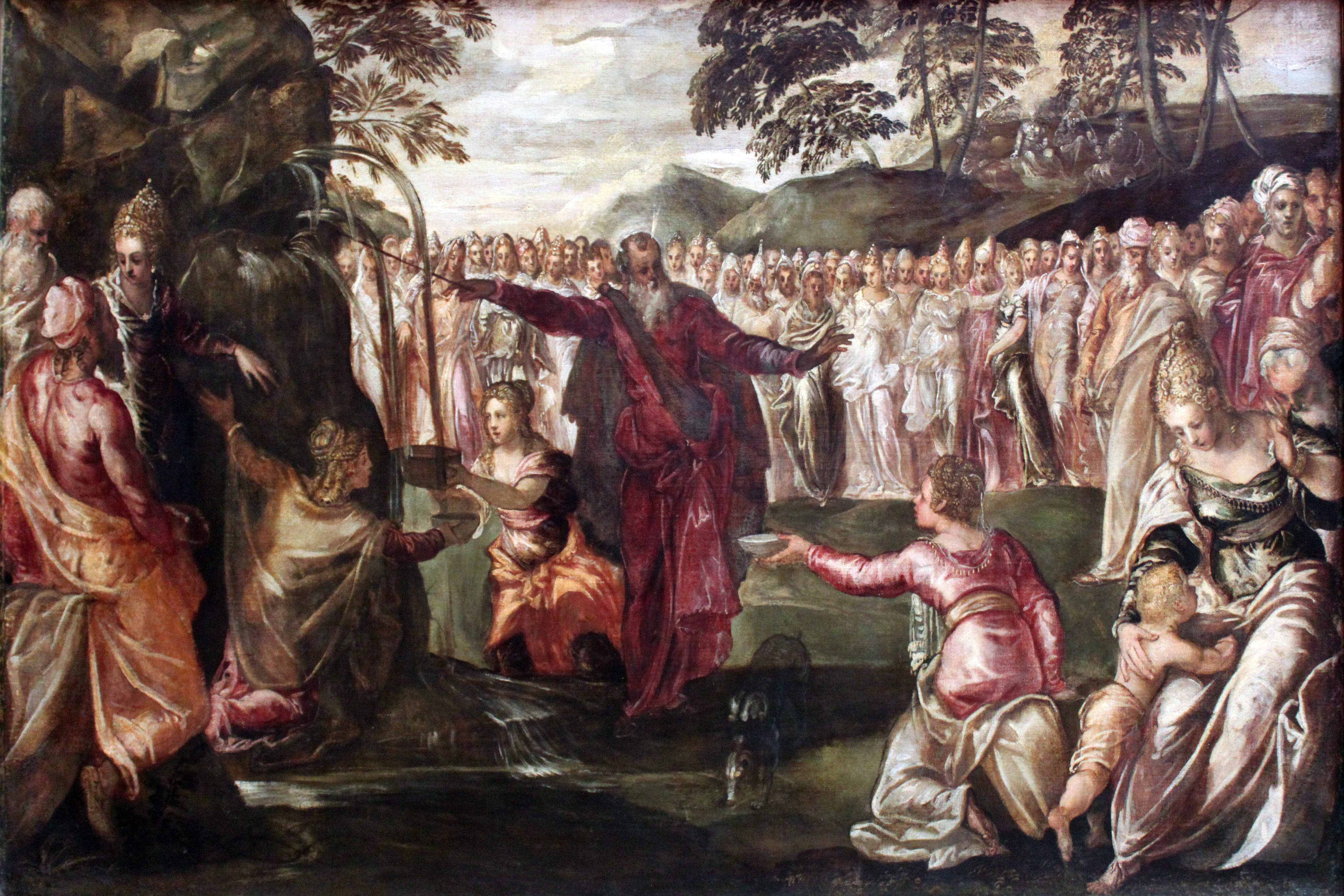
Image: Jacopo Tintoretto, File:1563 Tintoretto Moses Striking the Rock anagoria.JPG, c. 1563 — Public domain via Wikimedia Commons.
Scripture quotations are from the ESV® Bible (The Holy Bible, English Standard Version®), copyright © 2001 by Crossway, a publishing ministry of Good News Publishers. Used by permission. All rights reserved.
Seeing the devotion yesterday was a revelation, seeing it twice today was confirmation! I've been reaping in my sorrows, reaping in my tears, being uncertain and being discouraged, my heart feeling weary as David says in Psalm 42 ,
BUT just as he turns it around and says I have hope in God, I'll be sure that if I keep holding on, I will sow enjoy in joy, in abundance and prosperity!! this could have not come at a better time🧎🏻♀️🤲🏼🙏🏼
Modern Parables
I.
Woe to you, who wash your profiles and filter your faces, but inside are full of anguish and emptiness. You gather likes as if they were treasures, yet your soul is starving.
II.
You say, “We must protect our own borders,” but I say to you: that child in the ruins is your brother. You build cannons from rusted iron and call it security. Whoever takes up the sword shall perish by the sword—whether that sword be made of steel or a drone in the sky.
III.
Consider the plankton of the sea or the last ancient forests. They neither toil nor spin, yet your finest technologies cannot compare to the life within them. You destroy my Father’s garden to buy plastic that rots in your hands.
IV.
What does it profit a person to gain the whole world and reach a million views, yet lose themselves? Your soul is your only true home. Do not fear those who can destroy the body, but fear that which kills the capacity to love.
V.
Yes, the world is decayed and the body is a cage, but the darkness has not overcome the light. You are alone in your soul so that you might find there love—the source of your life
And not the void.