

Today's Verse
Those who sow in tears
shall reap with shouts of joy!
He who goes out weeping,
bearing the seed for sowing,
shall come home with shouts of joy,
bringing his sheaves with him.
Psalm 126:5-6
Historical Context
Psalm 126 is one of the fifteen Songs of Ascents (Psalms 120–134), the pilgrim songs Israelites sang as they climbed the road up to Jerusalem for the great feasts. Jerusalem sits high in the Judean hills, so every approach is literally an ascent. Families sang these short, memorable psalms together on the journey — they were the hymnal of God's pilgrim people.
The psalm looks back to a specific act of God: "When the LORD restored the fortunes of Zion." The most natural reference is the return from Babylonian exile under Cyrus's decree in 538 BC, when the unthinkable happened and captives walked home. Even the surrounding nations took notice: "The LORD has done great things for them."
But the second half of the psalm reveals that the return was not the end of hardship. The people are still praying, "Restore our fortunes, O LORD" — still asking for what they have already partly received. The image in verse 4 helps: the Negeb is the arid southern region where stream beds (wadis) lie bone-dry most of the year, then surge with water after rain. The pilgrims are asking God to do it again — to flood the dry places.
The closing image would have struck any farmer in that audience. In a subsistence economy, the seed you scattered in autumn was grain your family could have eaten. Sowing in a lean year meant going out with tears — and trusting that God would bring the harvest. The psalm holds memory and hope together: God has acted, and God will act again.
Reflection
Psalm 126 refuses to pretend. It does not tell the weeping sower to cheer up or to manufacture a smile for the journey. It tells him the truth: the tears are real, and so is the harvest.
Most of us live somewhere in the middle of this psalm. We can remember mercies — answered prayers, dark seasons God carried us through, the moment grace first broke in. "The LORD has done great things for us; we are glad." And yet we are still praying verse 4: restore us again, Lord. The marriage is still strained. The diagnosis still stands. The wayward child has not yet come home. The dryness in our own soul has not yet been flooded.
The gospel does not erase this tension; it deepens and answers it. Our Lord Himself was the Man of Sorrows who went out weeping, bearing precious seed. On the cross He sowed in tears the seed of His own life, and on the third morning God brought in the first sheaf of an unstoppable harvest. Because He rose, every tear sown in faith is a seed, not a waste. Paul says it plainly: in the Lord your labor is not in vain.
So keep sowing. Keep praying for the prodigal. Keep speaking the truth in love. Keep showing up to worship when your heart feels like the Negeb in August. Keep repenting of the sin you have wrestled for years. The God who emptied Babylon and emptied the tomb is not finished with you. The streams will run in the desert again. The sheaves will come in. Christ Himself guarantees it.
For Reflection
Where in your life are you sowing in tears right now, and what would it look like to keep sowing in trust that God brings the harvest?
Prayer
Father, You have done great things for us, and we are glad. Yet we still ache for the restoration only You can bring — in our families, our hearts, and our world grown dry. Teach us to sow in tears without losing heart, trusting the risen Christ who turned a cross into a harvest. Flood the desert places of our lives like streams in the Negeb, and bring us home at last with shouts of joy, our arms full of sheaves. In Jesus' name, Amen.
Recent Devotionals
He Bent Down to Listen — June 12, 2026
Something Greater Than the Temple Is Here — June 10, 2026
Outside the Camp With Jesus — June 9, 2026
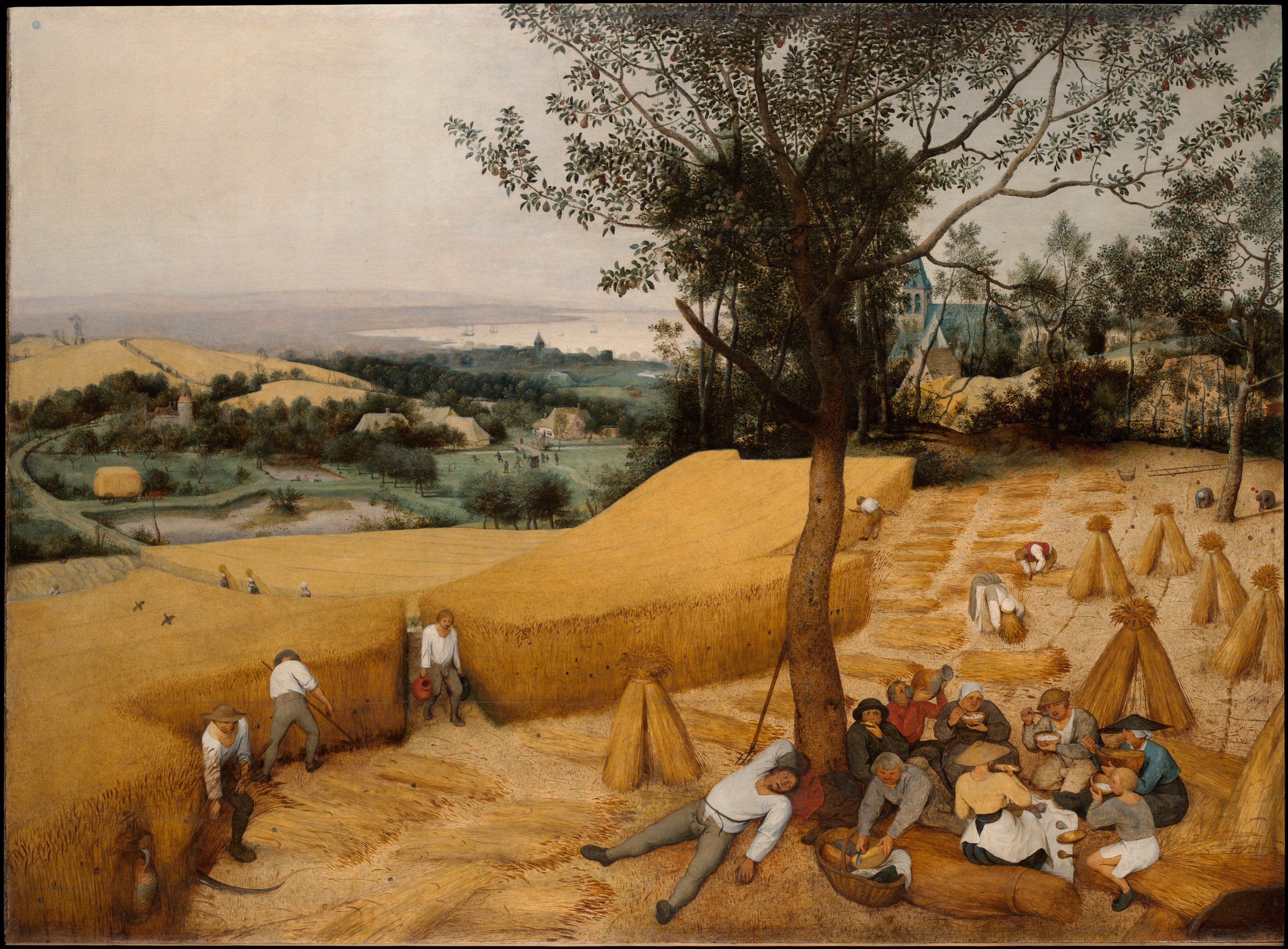
Image: Pieter Bruegel the Elder, The Harvesters, c. 1565, Metropolitan Museum of Art, New York — Rogers Fund, 1919 via The Metropolitan Museum of Art.
Scripture quotations are from the ESV® Bible (The Holy Bible, English Standard Version®), copyright © 2001 by Crossway, a publishing ministry of Good News Publishers. Used by permission. All rights reserved.
Amen 🙏
Thank you.