

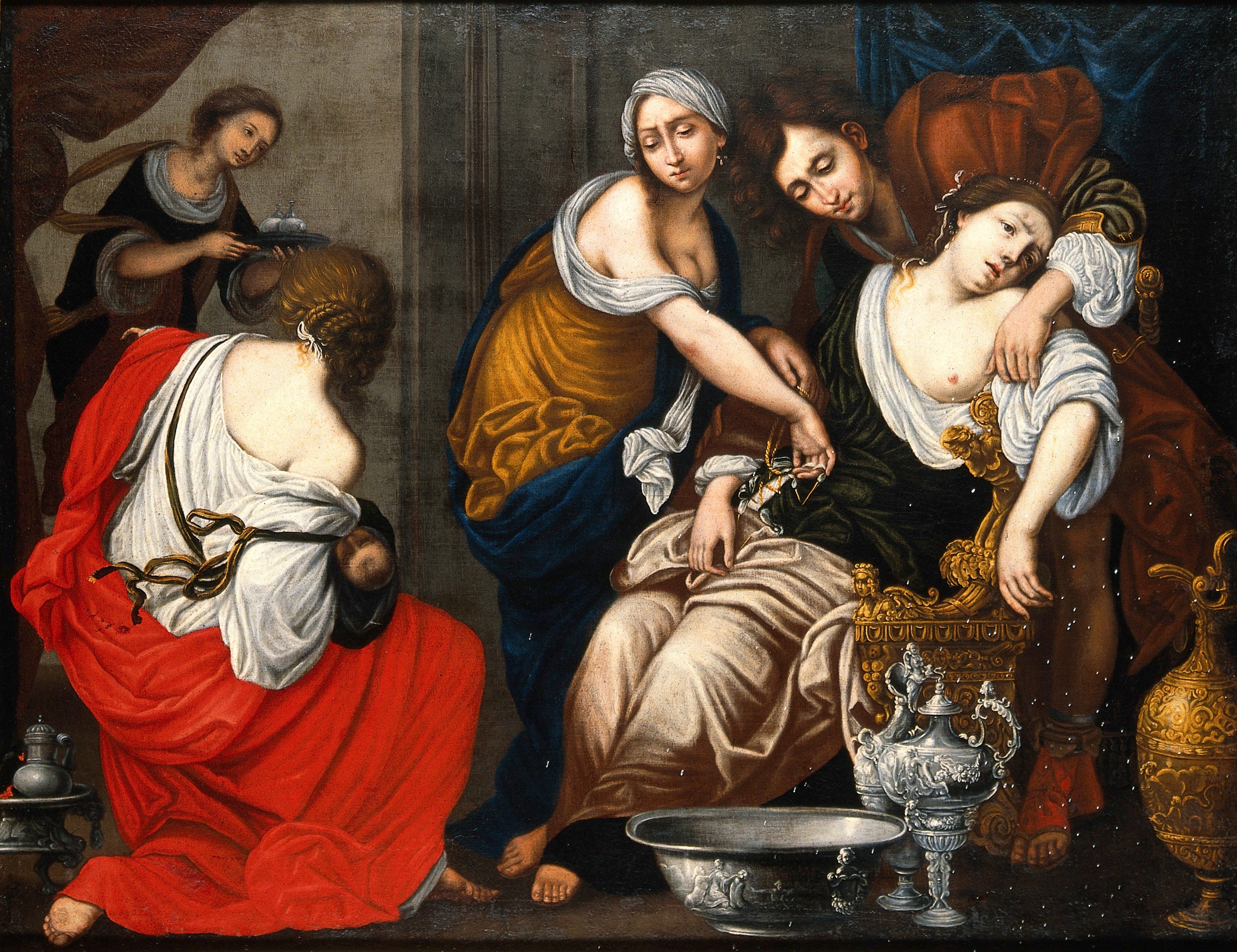
Today's Verse
And as her soul was departing (for she was dying), she called his name Ben-oni; but his father called him Benjamin.
— Genesis 35:18
Historical Context
Genesis 35 sits at the seam between the Jacob narratives and the Joseph narratives. Jacob has just come from Bethel, where God renewed the covenant and confirmed the name Israel. Now, on the road south, the family is struck by loss after loss.
Rachel dies giving birth to her second son near Ephrath — a place the narrator pauses to identify as Bethlehem. Moses is writing to Israelites who know that name: centuries later David will be born there, and centuries after that, the Christ. The pillar Jacob sets up was still standing when Genesis was compiled, a real marker on a real road.
Reuben's sin with Bilhah is not a lapse of passion but a power move. In the ancient Near East, taking a father's concubine was how a son claimed succession (see Absalom in 2 Samuel 16). Reuben is grabbing at the firstborn's rights while his father grieves. Jacob hears — and remembers. On his deathbed he will strip Reuben of the birthright for this very act (Genesis 49:3-4).
The formal list of the twelve sons then anchors the family as the seed of the promised nation, even though one son was born of dying labor and one has just disqualified himself. The chapter closes with Isaac's burial at Hebron — Esau and Jacob standing together at the grave, the old rivalry quieted by death.
The original audience, wandering toward a promised inheritance themselves, would have read this and understood: the covenant advances through funerals, failures, and long dusty roads. God's purpose is not fragile.
Reflection
Rachel names her son Ben-oni — "son of my sorrow." With her last breath she tells the truth of what it cost to bring him into the world. Jacob hears her, and gently overrules her: Benjamin, "son of my right hand." He will not let the boy carry his mother's death as his name.
That small act is a picture of what God does with us. We are quick to name ourselves by our wounds — son of my sorrow, daughter of my failure, child of what was done to me. The Father hears the truth of it and gives us another name. In Christ you are not defined by the grief that produced you or the sin that shaped you. You are seated at the right hand.
But notice what surrounds Rachel's death: Reuben's grab for power, and Isaac's grave. Sin and death press in on every side of this chapter, and the covenant keeps walking anyway. Rachel dies on the road to Bethlehem — the very road that will one day carry a young mother named Mary, and a Son whose birth would also cost a life, though this time the Son's own.
What Reuben tried to steal by defiling his father's bed, Christ received freely from His Father: the birthright, the right hand, the inheritance of the nations. And He shares it with everyone who will stop grasping and start trusting.
You live on the same road these patriarchs walked. It has graves on it. It has failures on it. And it leads, still, to Bethlehem — and past Bethlehem to an empty tomb. Keep walking. The promise does not die when the people around it do.
For Reflection
What name have you been carrying that God wants to replace — and what would it look like to answer to His name for you instead?
Prayer
Father, we come to You on a road marked by graves and failures, and we are tempted to name ourselves by our sorrows. Thank You that in Christ You have given us a better name and seated us at Your right hand. Forgive us where we, like Reuben, grasp at what is not ours. Teach us to trust that Your covenant does not falter, and to keep walking toward the Bethlehem where Your Son was given for us. In Jesus' name, Amen.
Recent Devotionals
The Brother He Feared Ran to Embrace Him — July 21, 2026
Written in His Book Before Your First Breath — July 20, 2026
The Ladder Came Down to a Fugitive — July 19, 2026
Image: File:The birth of Benjamin and the death of Rachel. Oil painting Wellcome V0017370.jpg — CC BY 4.0 via Wikimedia Commons.
Scripture quotations are from the ESV® Bible (The Holy Bible, English Standard Version®), copyright © 2001 by Crossway, a publishing ministry of Good News Publishers. Used by permission. All rights reserved.
Thank you Jesus for dying on the cross for me
“‘God’s purpose is not fragile’ is the line that stayed with me. Genesis 35 does not minimize grief, failure, or death, yet none of them cancel God’s faithfulness. The road may be marked by sorrow, but His promise keeps walking.”