

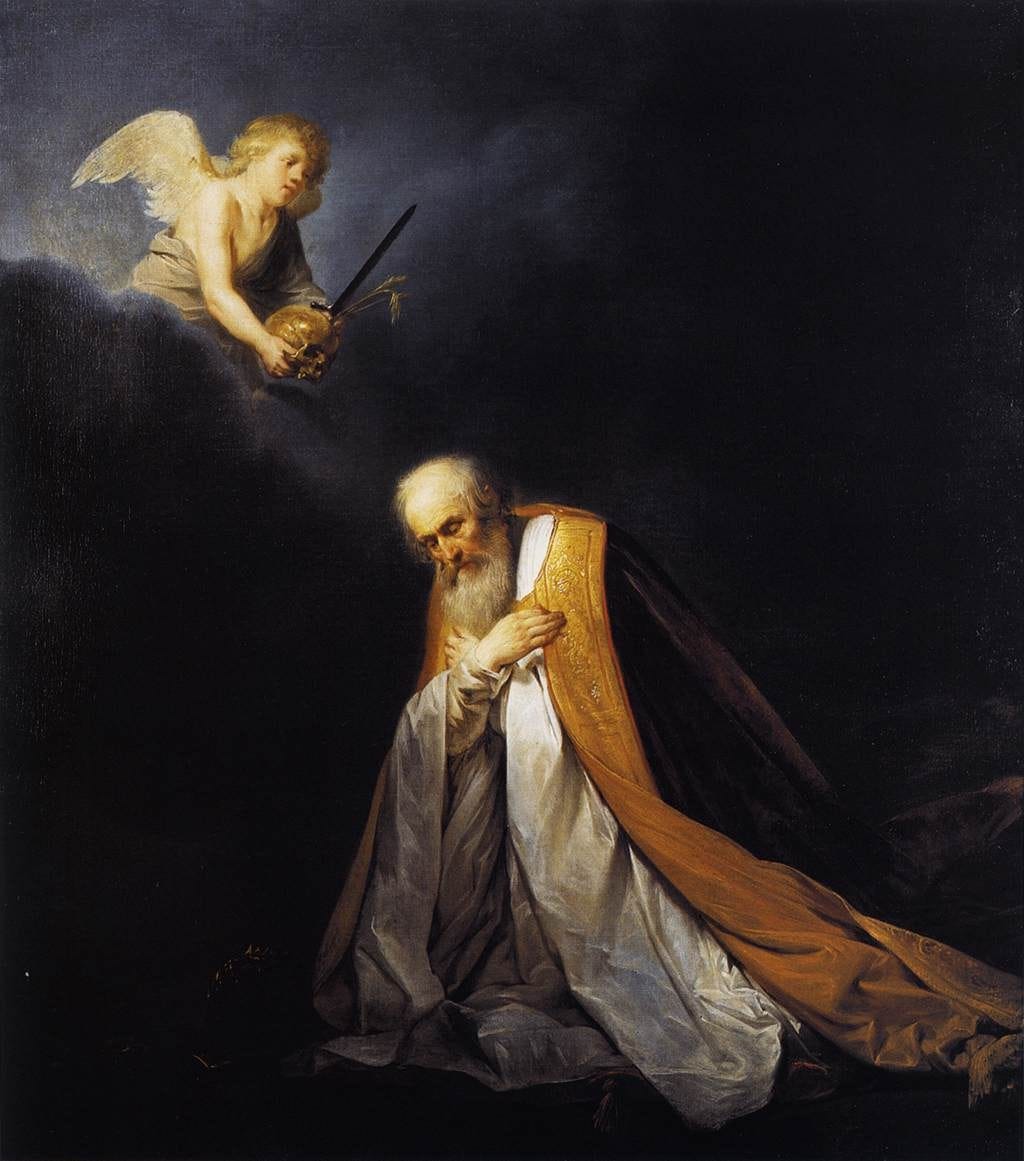
Today's Verse
To you, O LORD, I call;
my rock, be not deaf to me,
lest, if you be silent to me,
I become like those who go down to the pit.
Psalm 28:1
Historical Context
Psalm 28 is attributed to David, and it reads like the prayer of a king under threat. The specific crisis is not named, which is part of why God's people have prayed it for three thousand years in every kind of trouble. David is surrounded by men who 'speak peace with their neighbors while evil is in their hearts' (v. 3), a line that fits several moments in his life: Saul's court, Absalom's rebellion, Doeg the Edomite, Ahithophel's betrayal.
Two cultural details sharpen the psalm. First, lifting the hands 'toward your most holy sanctuary' (v. 2) is a pointed gesture. David faces the tabernacle, where the ark sits behind the veil and the Lord is enthroned between the cherubim. He prays toward the one place on earth where God has promised to meet his people. Second, 'the pit' (v. 1) is Sheol, the realm of the dead. For David, divine silence is the difference between the living and the dead. If the Lord will not speak, David is already a corpse.
The psalm then turns, sharply, at verse 6. 'Blessed be the LORD! For he has heard.' Nothing in the outward situation has changed on the page, but David has moved from pleading to praise. He ends by widening the prayer beyond himself: 'Oh, save your people and bless your heritage.' The anointed king prays for the flock he was anointed to shepherd, and hands them to the true Shepherd who will 'carry them forever' (v. 9).
Reflection
Most of us have prayed the first half of this psalm without knowing it. The heart cry, 'do not be silent,' is what rises when God seems absent and the people who lie and scheme appear to prosper. David does not pretend otherwise. He names the silence. He names the wicked. He asks God to deal with them justly, because he believes God is just.
Notice that David leaves the matter in God's hands. He had chances to kill Saul and refused them. The prayer for judgment is a prayer, handed up to the only Judge who sees the heart. That is still the shape of Christian life under injustice. We are told to hate evil and to leave vengeance to God (Romans 12:19). The cross itself is the proof that God does not wink at sin: every sin ever committed will be either covered by the blood of Christ or answered for by the sinner.
And then, verse 6. 'Blessed be the LORD! For he has heard.' David's circumstances look the same, yet his certainty has changed. This is faith. Faith is the settled confidence that he has heard, because he has promised to hear his people, even before any feeling of relief arrives. If you are in the first half of the psalm today, take your time there, and keep reading toward verse 6. The same God who was David's rock and shield is yours in Christ, who was himself dragged off with the wicked so you would not be. He heard every cry from the cross. He hears yours.
For Reflection
Where in your life right now are you waiting in the silence between verse 1 and verse 6, and what would it look like to trust that God has already heard?
Prayer
Father, you are our rock and our shield. When we cry out and hear nothing, keep us from the pit of despair and fix our eyes on your faithfulness. Teach us to hand our enemies over to your justice rather than carry them in our own hearts. Give us David's confidence that you have heard, even before we see your answer. Shepherd your people. Carry us forever, for the sake of Jesus Christ our anointed King. In his name we pray, Amen.
Paid subscribers get the study section below: the word behind the English, the setting, and where this thread runs through the rest of Scripture.