

Today's Verse
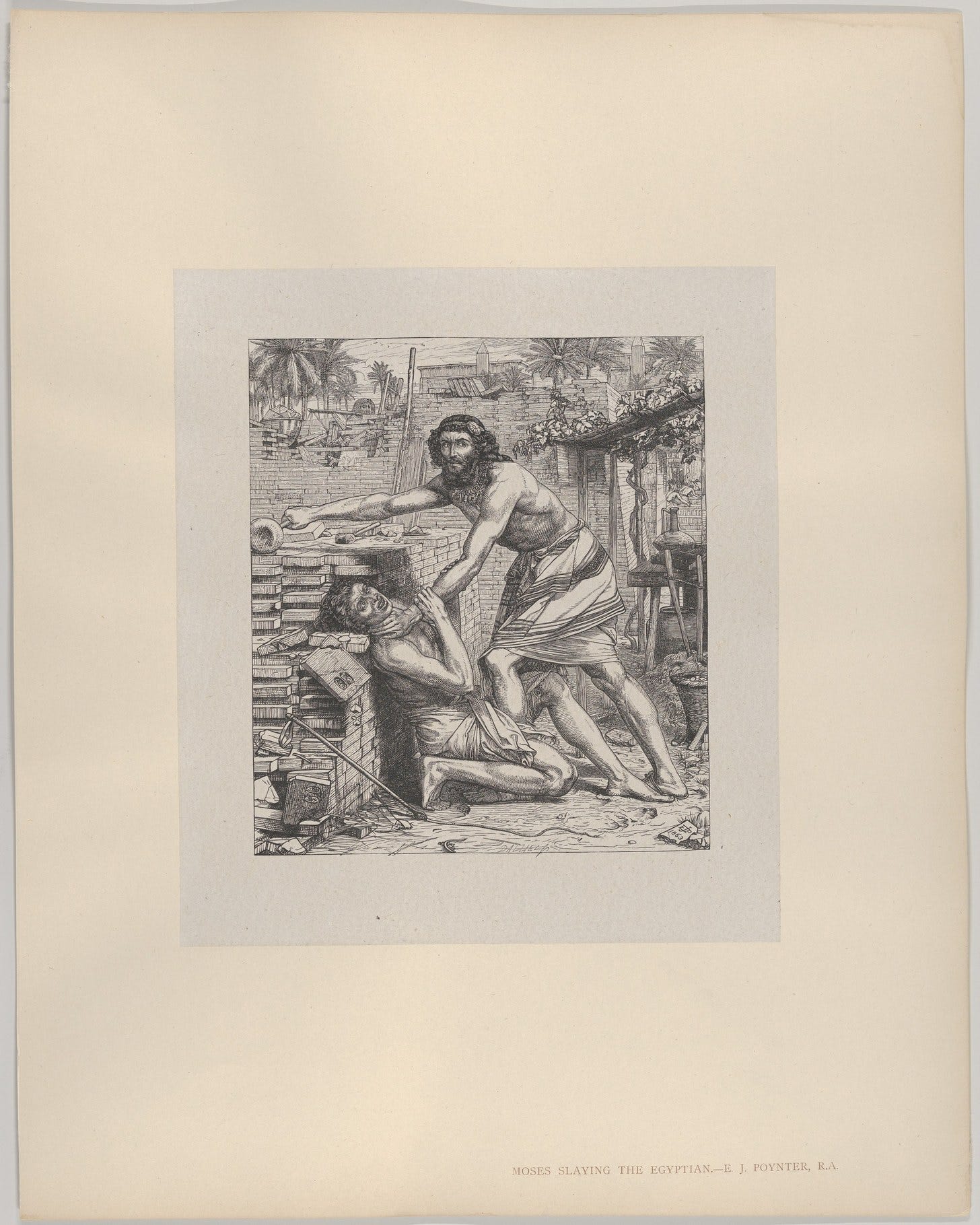
He looked this way and that, and seeing no one, he struck down the Egyptian and hid him in the sand.
Exodus 2:12
Historical Context
Exodus opens roughly four centuries after Joseph. The Hebrews have multiplied into a nation inside Egypt, and a new dynasty, likely from the vigorous Eighteenth or Nineteenth Dynasty period, has enslaved them and ordered the slaughter of their male infants. Moses, hidden in the Nile and drawn out by Pharaoh's daughter, has grown up in the royal household. Acts 7:22 tells us he was instructed in all the wisdom of the Egyptians and was mighty in words and deeds. He is, by any worldly measure, the most powerful Hebrew alive.
The passage assumes something modern readers can miss: Moses knew he was a Hebrew. His mother had nursed him as an infant, and the identity of his people had been kept in front of him. When the text says he went out to his people and looked on their burdens, it is describing a deliberate act. He was around forty (Acts 7:23), old enough to be reckoning with what he was called to do.
Egyptian law made the killing of an Egyptian by a Hebrew a capital offense, and the desert sand near the labor sites was a working man's grave. The detail that Moses looked this way and that is not decoration. It is Scripture telling us he knew this was murder, not lawful judgment. When the news reaches Pharaoh, the throne moves against him, and Moses runs east into Midian, the harsh territory of Abraham's sons by Keturah. There, at a well, he will sit for forty more years before the God of his fathers speaks from the bush. The deliverer will not be ready until the prince has become a shepherd.
Reflection
Moses saw a real evil. An Egyptian was beating a Hebrew, one of his people. The compassion was right. The cause was right. The man was even, in some sense, the right man; God had preserved him from the Nile precisely to deliver Israel. And yet everything about how he acted was wrong.
He looked this way and that. He made sure no one was watching. That is not the posture of a servant of God, it is the posture of a man doing his own will and hoping heaven does not notice. Then he hid the body in the sand, as if sand could hide anything from the Lord. The next day, when a fellow Hebrew threw his own words back in his face, the whole scheme collapsed. Forty years in Midian followed.
We should feel this, because we do it. We see a wrong that needs righting: in the family, in the church, at work, in the culture. The cause is just. We are even, perhaps, the right person to speak. And then we act in the flesh. We look this way and that. We calculate. We strike, we cut, we post, we settle it. And we bury the evidence of our pride under sand we tell ourselves is righteousness.
God was not finished with Moses, and he is not finished with you. But he will not use a deliverer who works like Pharaoh. The burning bush is forty years away because the man who struck down the Egyptian is not yet the man who will say, Who am I that I should go to Pharaoh? The path to real usefulness runs through the death of self-appointed heroics. Repent of the sand. Wait for the bush.
For Reflection
Where in your life right now are you tempted to do a right thing in a wrong way, and what would waiting on God look like instead?
Prayer
Father, you see what we bury in the sand. You see the good causes we have taken into our own hands, the wrongs we have tried to right by our own strength, the pride we have dressed up as zeal. Forgive us. Teach us to wait for your call and to act in your Spirit, not in the flesh. Make us the kind of servants who can stand before the burning bush, small in our own eyes and ready to obey. In Jesus' name, Amen.
Paid subscribers get the study section below: the word behind the English, the setting, and where this thread runs through the rest of Scripture.