

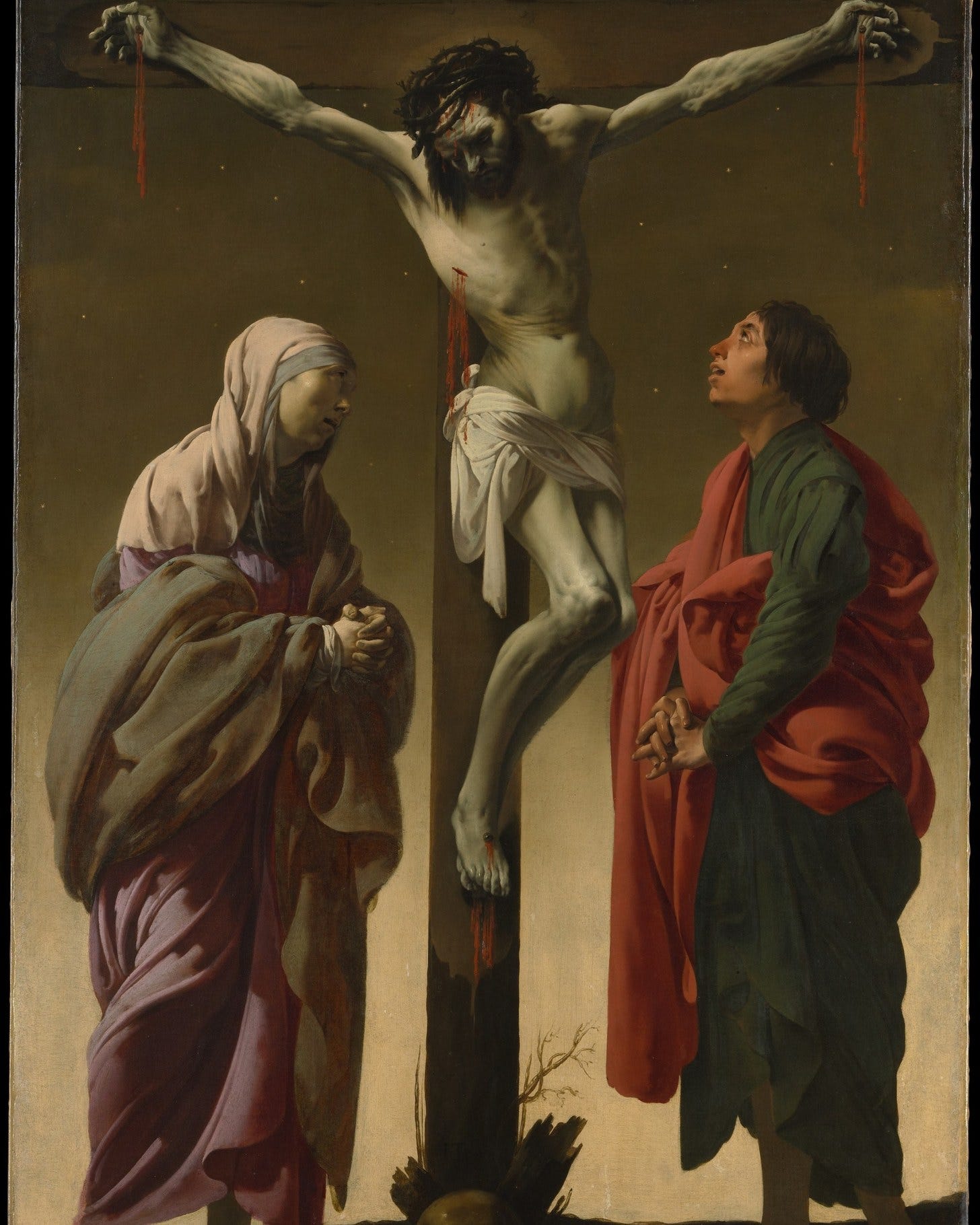
Today's Verse
And as Moses lifted up the serpent in the wilderness, so must the Son of Man be lifted up, that whoever believes in him may have eternal life.
John 3:14-15
Historical Context
John writes his Gospel late in the first century, likely from Ephesus, for a mixed audience of Jewish and Gentile Christians. By this point the Church has spread across the empire, and John is concerned that his readers grasp who Jesus actually is: the eternal Word made flesh, not merely a rabbi or wonder-worker.
These verses sit inside Jesus' night conversation with Nicodemus, a Pharisee and member of the Sanhedrin. Nicodemus comes in the dark, drawn by the signs but confused by the teaching. Jesus has just told him he must be born again, and Nicodemus cannot understand it. What follows is Jesus' own explanation of how new birth becomes possible.
The reference to Moses and the serpent points back to Numbers 21. Israel had grumbled against God in the wilderness, and the Lord sent venomous serpents among them. When the people repented, God told Moses to fashion a bronze serpent and lift it on a pole. Anyone bitten who looked at it would live. It was not the bronze that healed; it was God's mercy, received through the appointed sign.
Jesus takes that episode and says: this is a picture of me. The Son of Man will be lifted up, on a Roman cross, and whoever looks to him in faith will live. To a Pharisee who knew every syllable of the Torah, this reframing was startling. The wilderness was not just history. It was prophecy.
John 3:16, the most quoted verse in the Bible, is therefore not a standalone slogan. It is the punchline to a discussion about serpents, sin, and a God who provides the remedy at his own cost.
Reflection
We tend to read John 3:16 as if it were a greeting card. Read in context, it is something far more serious. The world Jesus loves is a world under judgment, bitten and dying, unable to save itself. The love of God is not sentimental affection; it is the love of a rescuer who steps into the wreckage.
Notice how Jesus describes salvation. He does not say, try harder. He does not say, become more religious. He says, look. The Israelites in the wilderness did not cure themselves. They lifted their eyes to what God had provided, and they lived. In the same way, we are saved not by what we produce but by whom we trust. Christ crucified is the appointed remedy. There is no other.
And notice what this costs God. The Father gives his only Son. The Son is lifted up, meaning nailed to a cross. Substitution is not a theological abstraction here; it is the plain shape of the passage. He is lifted so we are not. He bears what we deserve so we may receive what we do not.
Verse 17 keeps us from misunderstanding the mission. Christ did not come this first time to condemn. He came to save. But that mercy has an edge: the offer requires a response. Whoever believes has eternal life. Whoever refuses remains under the judgment already resting on the world. There is no neutral ground under a lifted cross.
So look. Not at your effort, your track record, your feelings on a given morning. Look at Christ, lifted up for you, and live.
For Reflection
Where in your life are you still trying to cure the snakebite yourself instead of simply looking to Christ?
Prayer
Father, we thank you for loving a world that did not love you back. Thank you for giving your only Son, and for lifting him up so that we, bitten and dying in our sin, might look to him and live. Teach us to stop trusting our own remedies. Fix our eyes on Christ crucified, and let us rest in the salvation you have already provided. Make our lives a witness to your mercy. In Jesus' name, Amen.
Paid subscribers get the study section below: the word behind the English, the setting, and where this thread runs through the rest of Scripture.