

Today's Verse
Joseph answered Pharaoh, 'It is not in me; God will give Pharaoh a favorable answer.'
Genesis 41:16
Historical Context
Genesis 41 sits near the climax of the Joseph narrative (chapters 37-50), traditionally read as the work of Moses composing Israel's origin story for a people who themselves once lived, and would live again, under the shadow of Egypt. Joseph has been in prison for years, forgotten by the cupbearer whose dream he interpreted in chapter 40. Now Pharaoh dreams, and no one in Egypt's elaborate divinatory establishment can help him.
That matters. Egypt was a culture saturated with dream-interpretation manuals, sacred magicians, and a priesthood trained to read omens. Pharaoh himself was considered a divine figure, the living link between the gods and the Nile. When his 'magicians' (the same Hebrew word later used of Pharaoh's court in Exodus) fail, the failure is not incidental. It is a public exposure of Egypt's whole religious apparatus.
Into that vacuum a Hebrew slave is dragged from a pit. The shaving of his beard and changing of clothes is not a personal touch, it is Egyptian court protocol: Egyptians shaved, Semites wore beards. Joseph is being made presentable to a god-king.
The dreams themselves draw on familiar Egyptian imagery. The Nile was the source of Egypt's wealth, its annual flood determining harvest or famine. Cows and grain were symbols of Hathor and of Osiris. Pharaoh dreams in his own religious vocabulary, but only the God of Israel can read it.
The seven-year famine Joseph foretells is historically credible; Egyptian records mention multi-year famines tied to failed inundations. What is startling is not the crisis but the claim: the God of a forgotten prisoner governs the Nile, Pharaoh's throne, and the future itself.
Reflection
'It is not in me.' Four words that ought to hang over every Christian life.
Joseph has waited thirteen years for this moment. Sold, enslaved, falsely accused, imprisoned, forgotten. If ever a man had earned the right to seize an opportunity, to sell himself, to spin his gift into leverage, it is Joseph standing in Pharaoh's throne room. And his first sentence deflects every ounce of credit to God.
This is not false modesty. It is theological accuracy. Joseph knows what he has and what he does not have. The interpretation is not a technique he has mastered; it is a word God gives. And so he refuses to stand between Pharaoh and God. He will not be a broker of divine mysteries for personal gain.
We live in a Christian culture that constantly tempts us in the opposite direction. Platforms, brands, followings, gifts monetized and personalities marketed. Even in humbler settings, we are prone to quietly attach our name to what God has done: my insight, my prayer that got answered, my ministry. Joseph shows us the older, cleaner path. Whatever you carry that is worth anything, God gave. Say so.
There is also comfort here. If you have spent years in a pit, forgotten, wondering whether the small gift God gave you will ever be used, notice this: Joseph's obscurity did not diminish his usefulness one bit when God finally called his name. The prison did not blunt him; it prepared him. He walks in unadorned, gives God the glory, and speaks truth to power without flinching.
The Lord is not looking for impressive people. He is looking for people who will say, 'It is not in me,' and mean it.
For Reflection
Where are you most tempted to take credit for what God has actually done, and what would it look like this week to say plainly, 'It is not in me'?
Prayer
Father, teach us Joseph's honesty. Whatever gifts we carry, whatever fruit has come from our hands, we confess it is not in us. You gave it, you sustain it, and you alone deserve the glory. Guard us from the quiet pride that wants our name on your work. When we are forgotten in the pit, keep us faithful. When we are called before kings, keep us humble. Make us clear windows for your light. In Jesus' name, Amen.
Recent Devotionals
Forgotten by the Cupbearer, Remembered by God — August 12, 2026
Fleeing the House, Keeping the Faith — August 11, 2026
The Bloodied Robe and the Hidden Hand — August 10, 2026
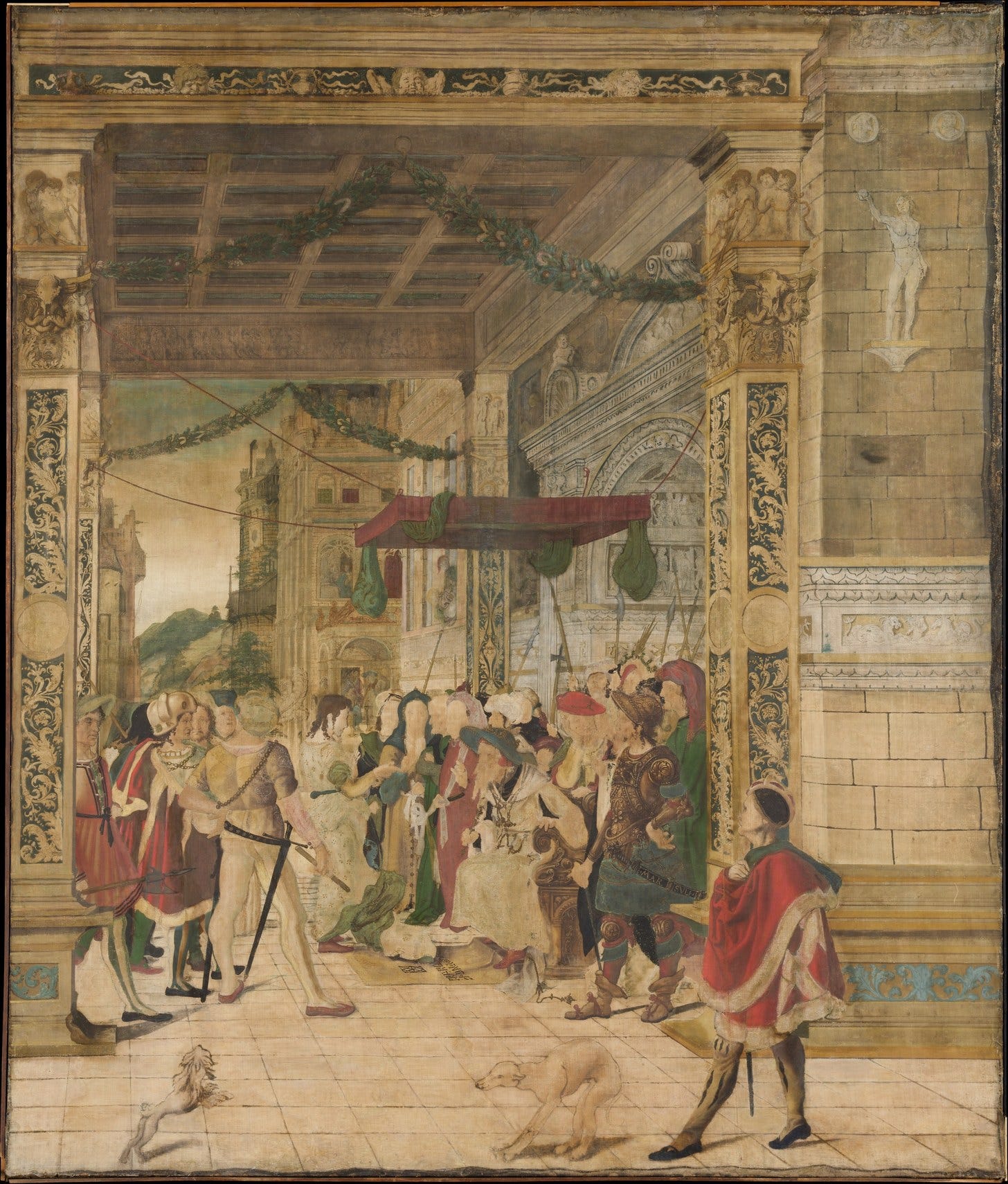
Image: Jörg Breu the Younger, Joseph Interpreting the Dreams of Pharaoh, c. ca. 1534–47, Metropolitan Museum of Art, New York — Marquand Collection, Gift of Henry G. Marquand, 1889 via The Metropolitan Museum of Art.
Scripture quotations are from the ESV® Bible (The Holy Bible, English Standard Version®), copyright © 2001 by Crossway, a publishing ministry of Good News Publishers. Used by permission. All rights reserved.
This was great 👍 Thanks for sharing it❣️ Yes Lord, it is always good to remember that we have nothing but what You have given to us and we Thank You Lord Jesus Christ❣️🙏❤️✝️❤️🩹💕😻