

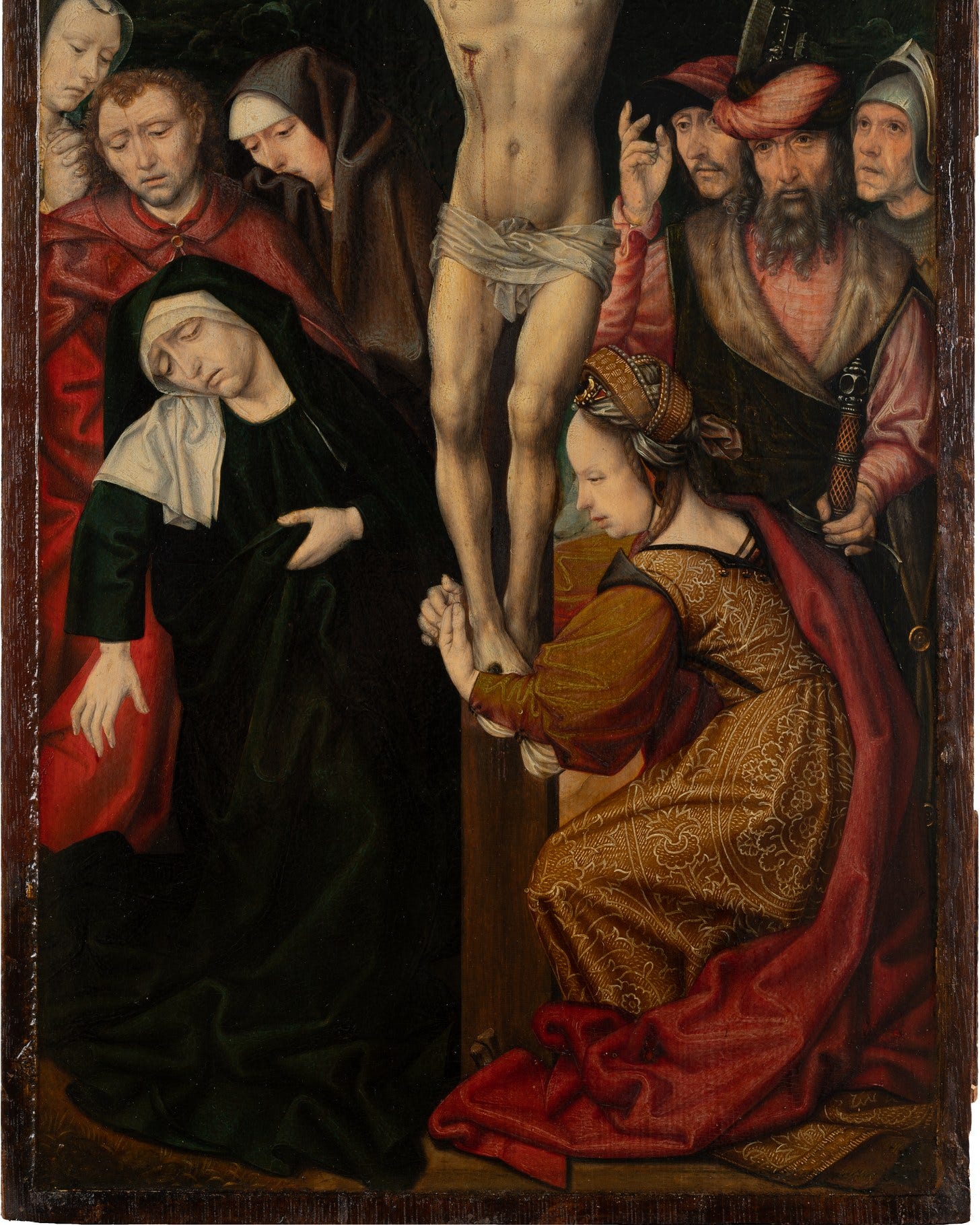
Today's Verse
For our sake he made him to be sin who knew no sin, so that in him we might become the righteousness of God.
2 Corinthians 5:21
Historical Context
Paul wrote 2 Corinthians around AD 55-56, likely from Macedonia, to a church he had founded on his second missionary journey. The relationship was strained. False teachers (Paul calls them 'super-apostles' later in the letter) had moved into Corinth and attacked his credentials, his bearing, even his speaking ability. They preferred a more impressive, more polished kind of leader. Paul had written a severe letter, made a painful visit, and now writes again after hearing from Titus that most of the church has repented.
Chapter 5 sits in a long defense of Paul's ministry that is not really about Paul. He keeps turning the argument back to the gospel itself. Before verse 17 he has written about the earthly tent of our body, the judgment seat of Christ, and the fear of the Lord that drives him to persuade people. Then comes this summary of what God has actually done in Christ.
The Corinthian context matters. This was a wealthy port city full of patron-client relationships, where ambassadors and envoys were a familiar sight: a lesser city sent a representative to speak on behalf of its people to Rome or to a greater power. Paul picks up that image. Christians are ambassadors, but the direction is reversed. The greater King sends his envoys to the lesser, pleading with rebels to lay down their arms and be reconciled.
Behind the whole passage sits the problem of a holy God and a guilty world. Paul will not soften either side. He names the trespasses. He names the wrath implied by needing reconciliation. And then he names the solution God himself provided.
Reflection
Verse 21 is one of the shortest and heaviest sentences in the New Testament. He made him to be sin who knew no sin. The sinless Son was treated, at the cross, as if he were sin itself, so that we, who are actually sinful, might be treated as if we were the righteousness of God. This is not a legal fiction or a sentimental metaphor. It is the substitution on which your salvation stands or falls.
Notice what Paul will not do. He will not say God overlooked our trespasses. He says God did not count them against us, because he counted them against Christ. The books balanced. Justice was not waived; it was satisfied. If you have ever wondered whether God can simply forgive you without the cross, this verse answers no. The cost was absolute, and it was paid.
And then Paul does something that preachers today rarely dare. He takes this towering doctrine and immediately turns it into a plea: be reconciled to God. He does not assume his readers are safe because they are religious. He treats the gospel as something that must be received, personally, now. If you have been drifting, if you have been managing a respectable Christian life while quietly estranged from the Lord who bought you, hear the apostle plead with you on Christ's behalf.
And if you are reconciled, you have been handed the same ministry. Not a career, a ministry. The people around you need to hear that God is not counting their trespasses against those who come to Christ. You are an ambassador. Speak like one.
For Reflection
Where in your life are you still living as though your trespasses are being counted against you, rather than against Christ?
Prayer
Father, we scarcely know what to do with the weight of this verse. Your Son, who knew no sin, was made sin for us. We did not deserve it. We cannot repay it. We can only receive it and worship. Make us new in Christ, not in word only but in the whole shape of our lives. Teach us to walk as those already reconciled, and send us as ambassadors to those who are not. In Jesus' name, Amen.
Paid subscribers get the study section below: the word behind the English, the setting, and where this thread runs through the rest of Scripture.