

Today's Verse
How long, O LORD? Will you forget me forever? How long will you hide your face from me?
Psalm 13:1
Historical Context
Psalm 13 is a short personal lament by David, handed to the choirmaster for use in Israel's public worship. That detail matters: David's private anguish was not kept private. It was set to music and sung by the gathered people of God, which tells us Israel expected its worship to make room for raw honesty before the Lord.
We don't know the specific crisis behind the psalm. David faced many — Saul hunting him through the wilderness, Absalom's rebellion, illness, betrayal by trusted friends. The language is deliberately open enough that any believer in any trouble can pray it. What we do know is the shape of David's world: an enemy is gaining ground, David feels forgotten by God, and the silence has gone on long enough that he is starting to fear it is permanent.
The phrase "hide your face" is covenant language. In the Aaronic blessing, the Lord makes his face shine upon his people (Numbers 6:25). To have that face hidden is to feel cut off from the warmth of God's favor — not necessarily because you are cut off, but because you cannot feel it. David is not doubting God exists. He is wrestling with a God he knows is real and seems, at the moment, distant.
The psalm is built in three movements of two verses each: complaint (1–2), petition (3–4), and trust (5–6). Four times David asks "How long?" Then everything pivots on a single word in verse 5: "But." Hebrew poetry often turns on such hinges, and Israel sang this turn together — learning, in their bones, how faith moves through darkness toward hope.
Reflection
Notice what David does not do. He does not pretend he is fine. He does not lecture himself about how he shouldn't feel this way. He does not paste a verse over the wound and move on. He tells God exactly how it feels: forgotten, hidden from, sorrowful all day long, losing ground to the enemy. Four times: how long, how long, how long, how long.
This is prayer. Real prayer. If you have been taught that mature faith means never complaining to God, Psalm 13 is your permission slip torn up and replaced with a commission. The Lord put this prayer in the hymnbook. He wants you to bring him the ache.
But lament is not the destination. Watch the hinge in verse 5: "But I have trusted in your steadfast love." David doesn't say he feels better. He doesn't say the enemy has retreated or the sorrow has lifted. He says he has trusted — past tense, settled, already done. His feelings are still in verse 2. His faith has moved to verse 5. Both are true at once.
This is the Christian life in miniature. We groan, and we hope. We weep at the grave, and we know the One who stood outside Lazarus's tomb. We feel the hiddenness of God's face, and we cling to the Cross where that face was turned away from the Son so it would never be turned away from us. The steadfast love David trusted has a name now, and a body, and scars in his hands.
Sing verse 6 even when you can only feel verse 1. The bountiful dealing is already yours in Christ.
For Reflection
Where in your life are you stuck in the "how long" — and what would it look like this week to speak the "but" of verse 5 out loud, even before your feelings catch up?
Prayer
Father, you are not far from us, even when your face feels hidden. Teach us to bring our "how longs" to you honestly, without shame, and to trust your steadfast love when our hearts cannot yet feel it. Light up our eyes. Steady our trembling faith on the finished work of your Son, who was forsaken so we never will be. Give us songs to sing in the dark, until the morning comes. In Jesus' name we pray, Amen.
Recent Devotionals
We Do Not Know What To Do — June 26, 2026
Our Sins Cast Into the Depths of the Sea — June 25, 2026
Sheep Sent Among Wolves — June 24, 2026
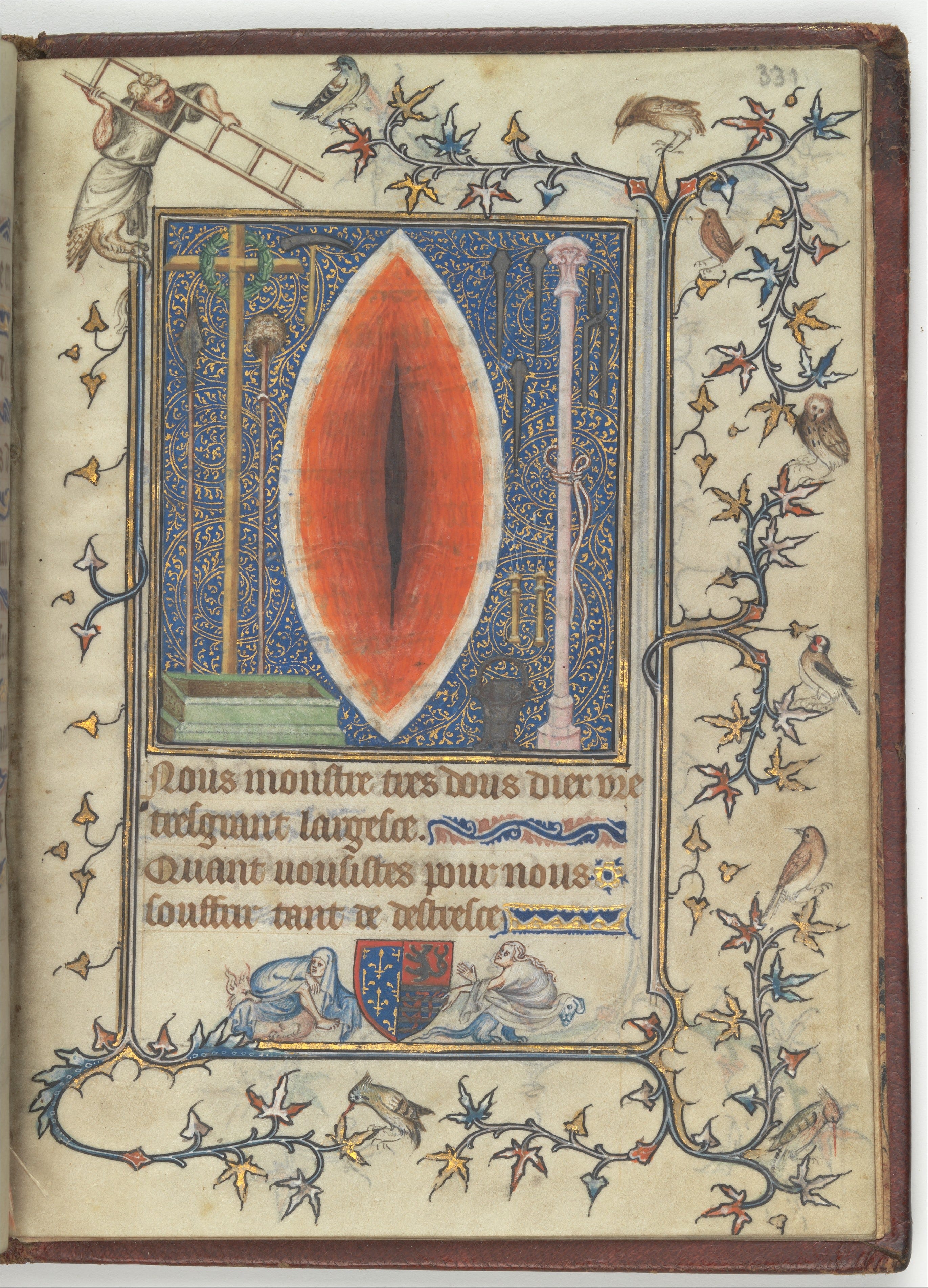
Image: Jean Le Noir, The Prayer Book of Bonne of Luxembourg, Duchess of Normandy, c. before 1349, Metropolitan Museum of Art, New York — The Cloisters Collection, 1969 via The Metropolitan Museum of Art.
Scripture quotations are from the ESV® Bible (The Holy Bible, English Standard Version®), copyright © 2001 by Crossway, a publishing ministry of Good News Publishers. Used by permission. All rights reserved.
This is beautiful! Thank you. Amen!!!
Amen 🙏🏼