

Today's Verse
And at the time of the offering of the oblation, Elijah the prophet came near and said, 'O LORD, God of Abraham, Isaac, and Israel, let it be known this day that you are God in Israel, and that I am your servant, and that I have done all these things at your word. Answer me, O LORD, answer me, that this people may know that you, O LORD, are God, and that you have turned their hearts back.' Then the fire of the LORD fell and consumed the burnt offering and the wood and the stones and the dust, and licked up the water that was in the trench. And when all the people saw it, they fell on their faces and said, 'The LORD, he is God; the LORD, he is God.'
1 Kings 18:36-39
Historical Context
First Kings was compiled during or after the Babylonian exile, looking back on the long, sad story of Israel's kings to explain how the covenant people ended up uprooted from the land. The compiler wants exiles to see plainly that Israel's collapse was not because the LORD failed, but because the people abandoned Him.
The contest on Mount Carmel sits in the ninth century B.C., under King Ahab of the northern kingdom. Ahab had married Jezebel, a princess of Sidon, and through her imported the worship of Baal — the Canaanite storm-god who supposedly sent rain and fertility. For a farming people in a land that lives or dies by the rains, Baal was a powerful temptation. Ahab built a temple for him in Samaria; Jezebel hunted down the prophets of the LORD.
Elijah had announced a drought three years earlier (1 Kings 17:1) — a direct challenge to Baal's supposed jurisdiction. Now he summons all Israel to Carmel, a ridge near the Mediterranean coast, and proposes a test: two bulls, two altars, no fire. The god who answers by fire is God. The 450 prophets of Baal cry, dance, and gash themselves from morning until afternoon. Nothing.
Then Elijah rebuilds the LORD's broken-down altar with twelve stones — one for each tribe, a quiet reminder that Israel is still one people under one God — drenches the sacrifice with water three times, and prays. The 'time of the oblation' is the hour of the evening sacrifice in Jerusalem, tying this northern showdown back to true temple worship.
Reflection
Notice how short Elijah's prayer is. The prophets of Baal had been screaming and cutting themselves for hours. Elijah says roughly thirty-five words in English, and fire falls from heaven.
God is not moved by volume, by frenzy, or by religious theatrics. He is moved by a servant who prays according to His word and for His glory. Read the prayer again: every petition is about God's name. Let it be known that you are God. Let this people know that you, O LORD, are God. Elijah is not asking to be vindicated. He is asking that the LORD be known.
We live among altars to other gods. They are subtler than Baal — comfort, career, sex, self, the approval of the room — but they make the same promise: serve us and we will give you life. And like Baal, they are silent when you need them most. The drought always comes. The fire never falls.
Elijah's confidence is worth pausing on. He soaks the sacrifice with water until the trench overflows, because he knows the LORD does not need easier conditions to work with. The God who raised Jesus from the dead is not embarrassed by impossible situations; He prefers them. They make it unmistakable whose power is at work.
And when fire falls, the people fall. They do not nod thoughtfully or add the LORD to their list. They land on their faces and confess twice: The LORD, He is God; the LORD, He is God. That is what true revival looks like — not enthusiasm, but surrender. Ask Him to do that work in you. Ask Him to burn away the altars you have been hedging your bets with.
For Reflection
What rival altar in your life have you been quietly maintaining alongside your worship of the LORD, and what would it look like to tear it down today?
Prayer
O LORD, God of Abraham, Isaac, and Israel, You alone are God. Forgive us for the small altars we have built to comfort, to self, to the approval of others. Send the fire of Your Spirit to consume what cannot stand in Your presence, and turn our hearts back to You. Make us servants who pray short prayers with deep trust, who care more for Your name than our own. We fall on our faces and confess: the LORD, He is God. In Jesus' name, Amen.
Recent Devotionals
By Myself I Have Sworn — June 29, 2026
Four How Longs and One But — June 27, 2026
We Do Not Know What To Do — June 26, 2026
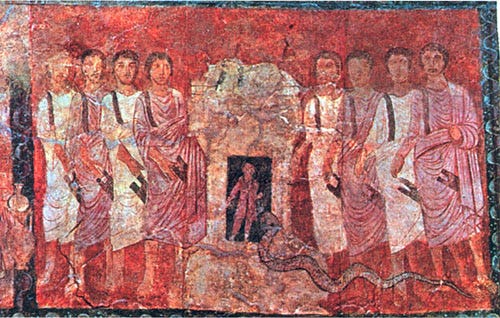
Image: Elijah challenging the prophets of Baal (period engraving) — Public Domain (period engraving) via Wikimedia Commons.
Scripture quotations are from the ESV® Bible (The Holy Bible, English Standard Version®), copyright © 2001 by Crossway, a publishing ministry of Good News Publishers. Used by permission. All rights reserved.
Faith is trusting that when we stand on God’s Word and seek His glory, He can answer even the impossible with unmistakable power.
Powerful wriitng.