

Today's Verse
Then Jesus called his disciples to him and said, "I have compassion on the crowd because they have been with me now three days and have nothing to eat. And I am unwilling to send them away hungry, lest they faint on the way."
Matthew 15:32
Historical Context
Matthew wrote his Gospel for a largely Jewish-Christian audience, arranging his account to show Jesus as the promised Messiah who fulfills Israel's story. By chapter 15, Jesus has moved into Gentile territory — the region of the Decapolis, east of the Sea of Galilee — after his encounter with the Canaanite woman. That geography matters. The feeding of the four thousand is not a duplicate of the earlier feeding of the five thousand (Matthew 14); it happens in a different place, with a different crowd, and Matthew is careful to record different numbers of loaves, fish, and leftover baskets. The first feeding took place among Jews; this one almost certainly includes many Gentiles, foreshadowing the day when people from every nation will be gathered at the Lord's table.
The detail that the crowd had been with Jesus three days is striking. These were not casual onlookers. They had followed him into a desolate place, brought their sick, and stayed to listen. They had run out of provisions. In a rural, subsistence economy, hunger this far from a village was genuinely dangerous — Jesus' concern that they might "faint on the way" is not sentiment but sober assessment.
Matthew's first readers would also have caught the echoes: God feeding Israel with manna in the wilderness, the prophet Elisha multiplying loaves for a hundred men (2 Kings 4), and the prophetic vision of a great feast on God's mountain for all peoples (Isaiah 25). Jesus is doing what only the Lord of Israel does — and doing it, now, for Gentiles too.
Reflection
Notice who speaks first. Not the disciples reporting a problem — Jesus, announcing his compassion. "I have compassion on the crowd… I am unwilling to send them away hungry." Before anyone asks him to act, he tells us what is already stirring in him.
This is the heart of our Lord. He is not a distant deity who must be talked into caring. He sees the crowd — tired, hungry, far from home — and he is moved. And what moves him moves him to act. Divine compassion in Christ is never merely a feeling; it becomes bread in the hand.
The disciples, meanwhile, look at the desolate place and see only what they lack. "Where are we to get enough bread…?" It is a fair question. It is also the question we ask every time we measure our lives by our resources instead of by the One who stands with us. Seven loaves. A few small fish. In his hands, more than enough — with seven baskets to spare.
And he feeds them himself. This is not a moral lesson about sharing. It is a revelation of who he is: the Lord who spread a table in the wilderness for Israel, now spreading a table for the nations, prefiguring the bread he will give as his own body broken for us. The same Christ who would not send four thousand away hungry will not send you away either. Come to him tired. Come to him empty. Come with your seven loaves and your honest fear that it is not enough. He gives thanks, he breaks, he gives — and those who eat are satisfied.
For Reflection
Where are you tempted to measure your situation by what you lack rather than by the compassion of Christ who stands with you in it?
Prayer
Lord Jesus, we thank you that your compassion moves before our asking. You see us in our weariness and will not send us away hungry. Forgive us for counting our loaves and forgetting your hands. Teach us to bring what little we have and to trust you to break it, bless it, and multiply it for your purposes. Feed us today with yourself, the true bread from heaven, that we may not faint on the way. In Jesus' name, Amen.
Recent Devotionals
Cut to the Heart on Pentecost Morning — August 4, 2026
The Fear of Isaac Stood Beside Him — August 3, 2026
The Limp That Marked a New Name — August 2, 2026
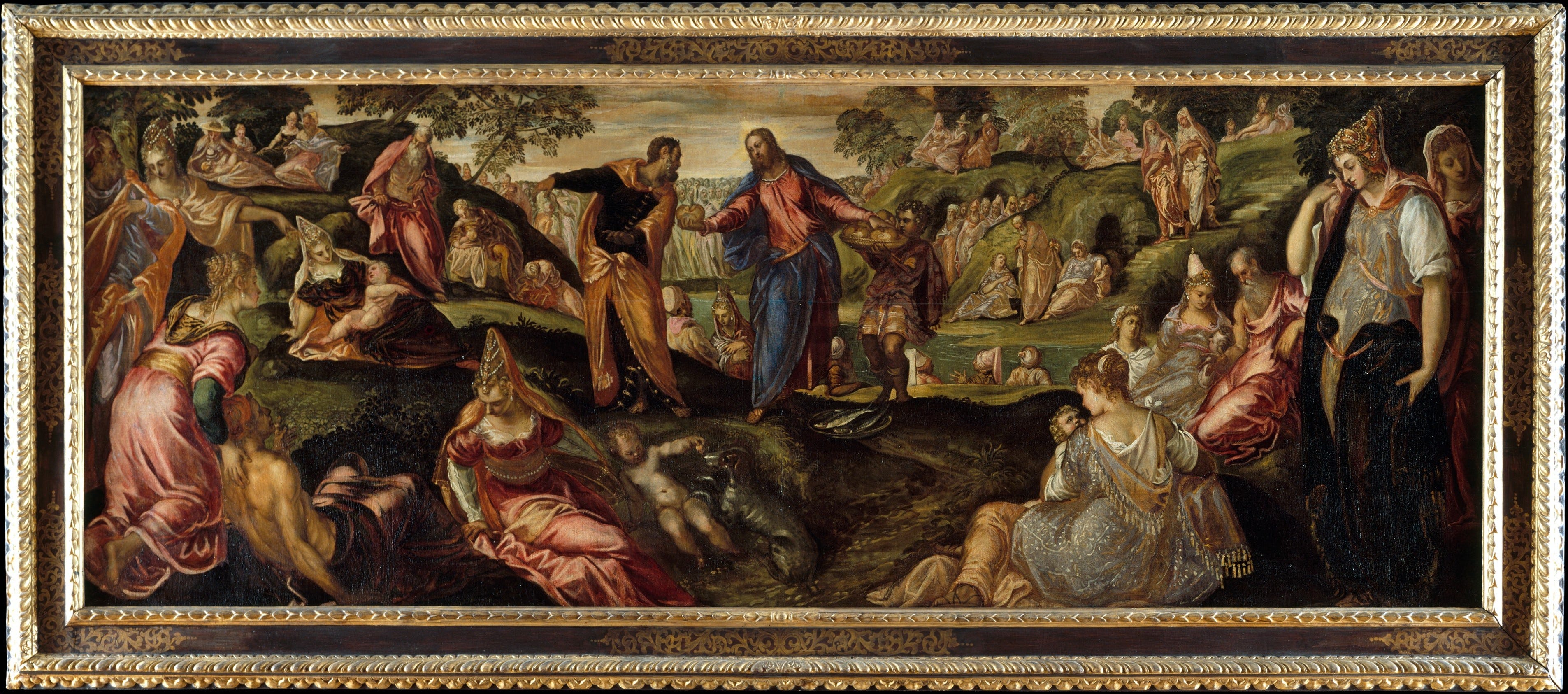
Image: Jacopo Tintoretto (Jacopo Robusti), The Miracle of the Loaves and Fishes, c. ca. 1545–50, Metropolitan Museum of Art, New York — Francis L. Leland Fund, 1913 via The Metropolitan Museum of Art.
Scripture quotations are from the ESV® Bible (The Holy Bible, English Standard Version®), copyright © 2001 by Crossway, a publishing ministry of Good News Publishers. Used by permission. All rights reserved.
I Love you FATHER , I thank you for my very existence and you leading me through a evil world while protecting me and giving me all the essentials I need for existence. Please walk with me every day and not let me take you for granted or place anything or anyone above you! I keep praying daily for the healing of my sister not for myself! I know you hear my prayers and I will wait patiently while I keep praying daily for her pain to escape her precious body so she may live the remainders of her day is peace stripped of pain
Amen
Thank You Lord Jesus Christ that Your compassion fails not, it is new every morning❣️🙏 I praise You, for I am fearfully and wonderfully made, and this my soul knows very well‼️💖💯💕😻