

Today's Verse
The voice of my beloved! Look, he comes, leaping upon the mountains, bounding over the hills... My beloved speaks and says to me: 'Arise, my love, my fair one, and come away, for now the winter is past, the rain is over and gone.'
Song of Solomon 2:8-10
Historical Context
The Song of Solomon — also called the Song of Songs, meaning the greatest of songs — is a Hebrew love poem traditionally attributed to Solomon, though its final form may have been shaped later. On its surface it is exactly what it appears to be: a passionate exchange between a bride and her bridegroom, celebrating covenant love in vivid, unembarrassed terms. Ancient Israel did not consider marital love too earthy for sacred Scripture; they considered it a signpost.
From the earliest days, both Jewish and Christian readers understood the Song to speak on two levels at once. The rabbis heard in it the love between the Lord and Israel. The Church Fathers — Origen, Gregory of Nyssa, Bernard of Clairvaux — heard the voice of Christ calling His Bride, the Church, and each soul within her. This is not a later imposition on the text. The prophets had already used marriage as the controlling image of God's covenant (Hosea, Isaiah 62, Ezekiel 16), and the New Testament crowns the picture: Christ is the Bridegroom, the Church His Bride (Ephesians 5, Revelation 19).
In our passage the bride hears her beloved coming — leaping over mountains, refusing to be delayed. He stands at the lattice and calls her out. The setting is springtime in the land: the winter rains have ended, fig trees are budding, turtledoves have returned from migration. For an agrarian people who knew hunger through the wet months, spring was resurrection made visible. And into that world the bridegroom's voice calls: Arise. Come away.
Reflection
Christ is not a distant deity waiting to be coaxed down. He is the Bridegroom who leaps over mountains to reach you. That is the picture Scripture insists on — the God who runs, who bounds, who will not be kept out by walls or lattices, who stands at the window of your life and calls your name.
And notice what He calls you to. Not to a task first, not to a program, not even first to moral improvement. He calls you to Himself. "Arise, my love, my fair one, and come away." The Christian life is not primarily about performance for a stern Master. It is about a Bridegroom who has already given Himself for His Bride on the Cross, who has risen, and who now calls her out of the long winter into His presence.
Many of us have lived through a real winter — of grief, of failure, of dryness, of habitual sin that felt frozen solid. Hear the Song again: the winter is past. The rain is over and gone. In Christ, resurrection is not just a doctrine; it is a season He brings into the soul. The flowers appear. The singing begins.
But the call requires a response: Arise. Come away. You cannot follow the Bridegroom while clinging to the old bed of the flesh. Repentance is how the Bride gets up. Faith is how she walks toward Him. And the fragrance of the vines, the fig tree's early fruit — these are the ordinary works of love that begin to appear in a life that has heard His voice and answered.
He is at the lattice today. He is still calling.
For Reflection
Where in your life is Christ standing at the window and calling you to arise — and what has kept you in the winter?
Prayer
Lord Jesus, Bridegroom of our souls, we hear Your voice at the lattice and we thank You that You did not wait to be sought but came leaping over every mountain to find us. Forgive us for lingering in winters of our own making. Give us grace to arise, to come away with You, and to walk in the springtime of Your resurrection. Let the fruit of Your Spirit blossom in us, and let our lives give forth the fragrance of Your love. In Jesus' name, Amen.
Recent Devotionals
Married to the Risen One — July 2, 2026
The Terrible Weight of Seeing Miracles — July 1, 2026
Fire on Mount Carmel — June 30, 2026
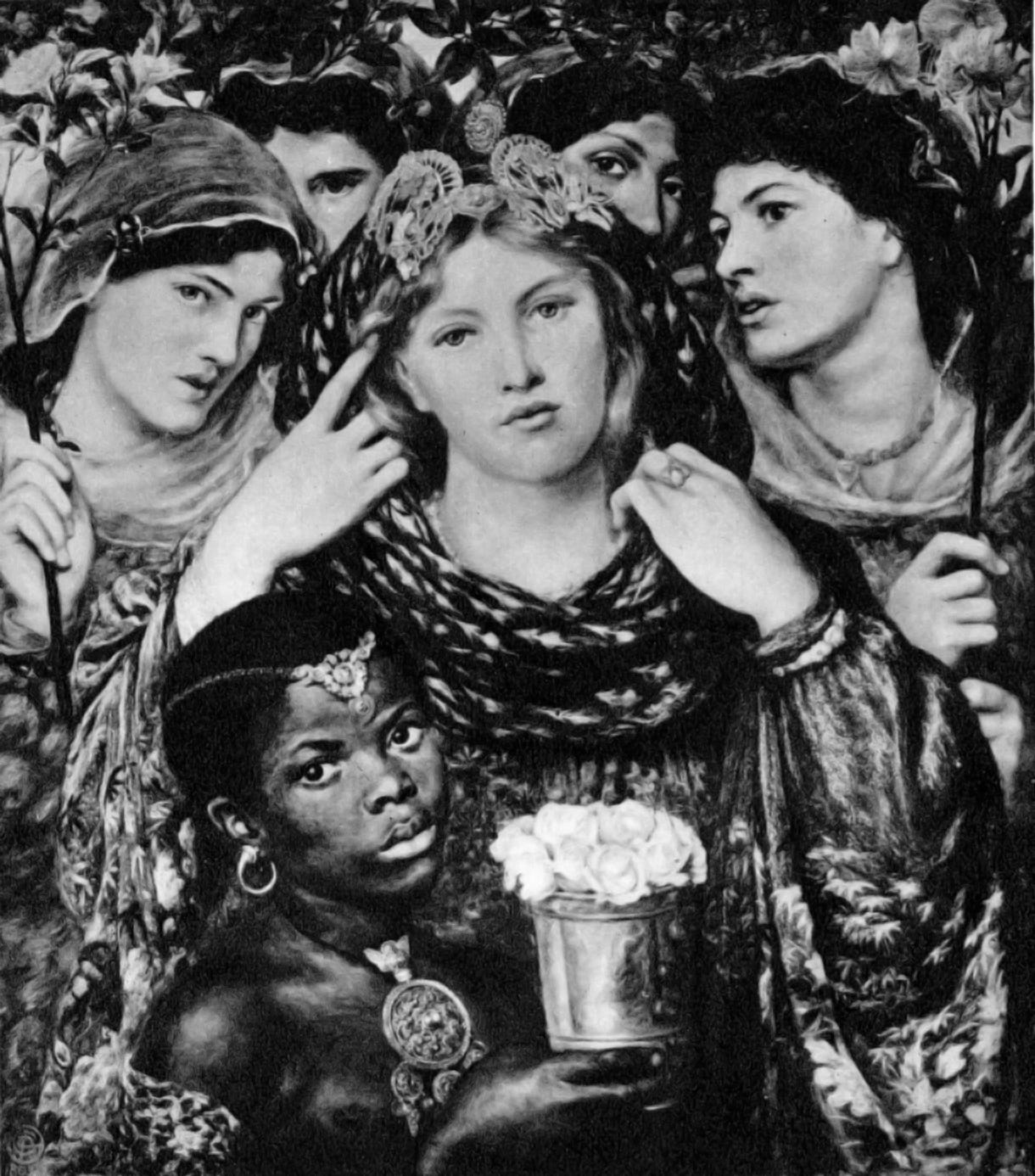
Image: Dante Gabriel Rossetti, Dante Gabriel Rossetti — The Beloved (1866, inspired by the Song of Songs), c. 1866, Tate Britain, London — Public Domain via Wikimedia Commons.
Scripture quotations are from the ESV® Bible (The Holy Bible, English Standard Version®), copyright © 2001 by Crossway, a publishing ministry of Good News Publishers. Used by permission. All rights reserved.
"Forgive us for lingering in winters of our own making." Yes, Lord! Amen!
Thank you so much ❤️ amen! God bless you