

Today's Verse
Thus the LORD used to speak to Moses face to face, as a man speaks to his friend.
Exodus 33:11
Historical Context
Exodus 33 sits in the rubble of Israel's worst failure so far. In chapter 32, while Moses was on Sinai receiving the covenant, the people melted their gold into a calf and worshiped it. God's wrath burned. Three thousand died by the Levites' swords. And at the start of chapter 33, God tells Moses something terrifying: I will send you up to the land, but I will not go with you, for you are a stiff-necked people and I would consume you on the way.
That is the setting for the little scene in verses 7-11. The tabernacle proper has not yet been built. What Moses pitches here is a provisional tent, placed deliberately outside the camp, away from a people who had just worshiped a calf. If you wanted to seek the LORD, you had to leave the camp and go out to him.
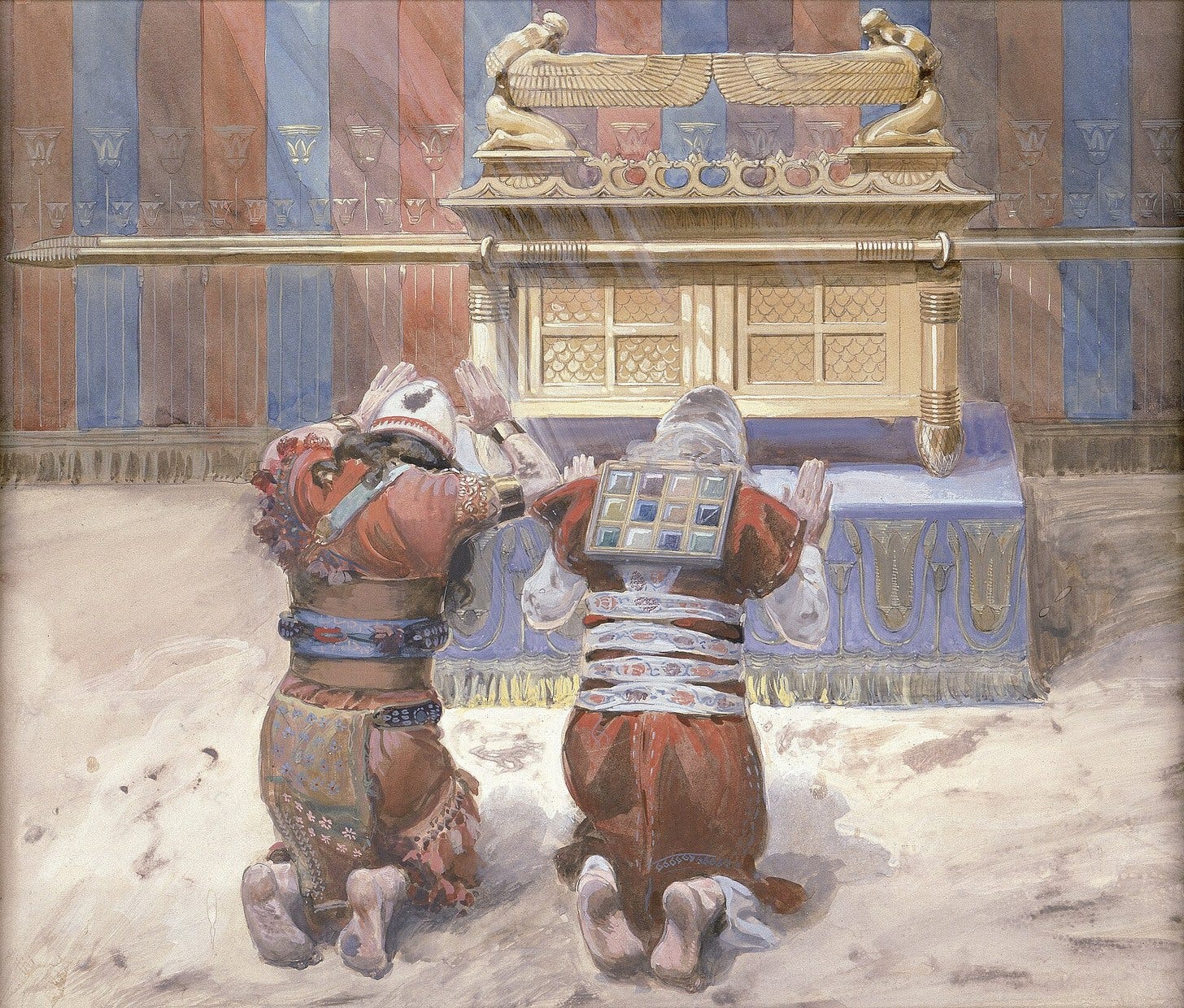
The pillar of cloud is familiar from the exodus itself. It had led Israel through the wilderness and had settled on Sinai when the law was given. Now it descends to this ordinary tent on the outskirts, and the people, from the doors of their own tents, watch and worship from a distance. Only Moses enters. Only Joshua, his young assistant, lingers behind.
The reader is meant to feel the ache of this arrangement. God is present, but at a remove. Access is mediated by one man. The nation that was supposed to be a kingdom of priests stands at its tent doors and watches someone else go in. This is the problem Exodus leaves unresolved and that the rest of Scripture answers: how can a holy God dwell in the middle of a sinful people without destroying them?
Reflection
Face to face, as a man speaks to his friend. Pause there. The God who tells Moses a few verses later that no one can see his face and live speaks with him as a friend speaks with a friend. Nearness and holiness held together in one man's experience, while the whole nation watches from a safe distance.
We read this and feel the pull of two things at once. We want the nearness. We also know, if we are honest, that we belong with the people at their tent doors, not with Moses in the cloud. Our sin is real. God's holiness is real. The gap between them is not a feeling, it is a fact.
This is why the gospel is not a self-improvement program. Christ did not come to teach us how to be a little more like Moses. He came to be the Moses we could never be, and more. He is the mediator who entered not a tent outside the camp but the true holy place, carrying his own blood. And when he died, the veil that kept worshipers at a distance tore from top to bottom. The arrangement in Exodus 33 was never meant to last.
So now, through Christ, what Moses had as the rare privilege of a prophet, every believer has as the ordinary grace of a Christian. You may speak to God as a friend speaks to a friend. Not because you have climbed to Moses' level, but because Christ has brought God down to yours and lifted you up to his.
Do not take it lightly. Moses had to walk out past the edge of the camp for what you have been given freely. Go in.
For Reflection
Where in your life have you been content to watch from your tent door when Christ has opened the way for you to go in?
Prayer
Father, we confess that we have treated the open door lightly. We have been near enough to watch and far enough to stay comfortable. Thank you for sending your Son to tear the veil, to be the mediator we needed, to make friendship with you possible for sinners like us. Draw us in. Teach us to speak with you honestly, to listen for your voice, and to walk with you as those who have been welcomed home. In Jesus' name, Amen.
Paid subscribers get the study section below: the word behind the English, the setting, and where this thread runs through the rest of Scripture.